Healthy School Snacks Compared: Nutrition, Price, and Lunchbox Convenience
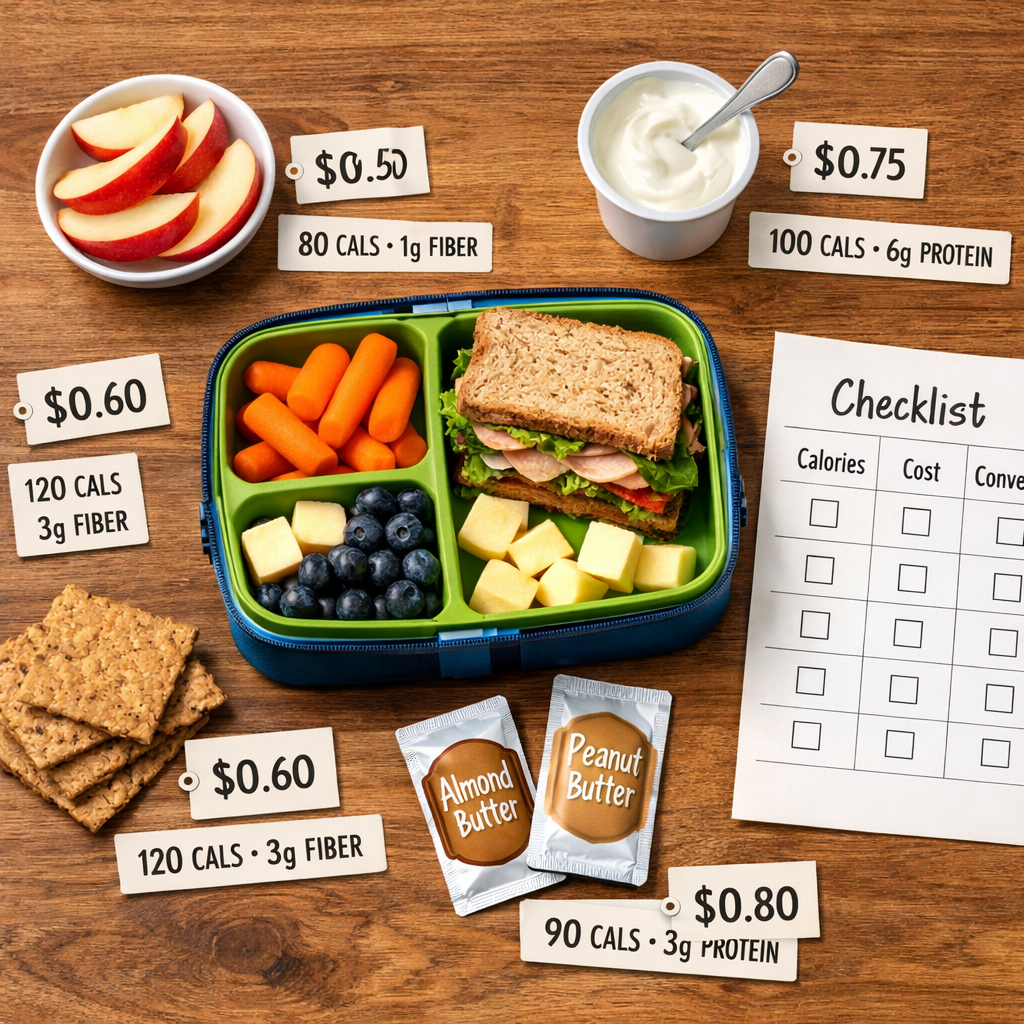
Healthy School Snacks Compared: Nutrition, Price, and Lunchbox Convenience
Healthy school snacks don’t have to be complicated or costly. This comparison-first guide from Snack Comparison Hub stacks the most portable lunchbox snacks by nutrition, value per ounce, and packability—so you can quickly choose options that balance protein, fiber, and low added sugar. We also flag nut-free and Smart Snacks standards alignment for school compliance. Expect practical swaps (like seed butters for nut-free rooms), clear WW Points estimates, and budget notes that show how fruit can cost about the same as chips. Use the Snack Comparison Hub tables to mix-and-match shelf-stable items with perishable picks that stay safe with an ice pack.
How we compare snacks
We use a standardized Snack Comparison Hub framework to make quick, apples-to-apples calls:
- Nutrition: protein, fiber, added sugar, and sodium. Why it matters: protein + fiber support satiety and steady energy; lower added sugar and sodium support long-term health.
- Estimated WW Points: a single-number view balancing calories, protein, sugar, and saturated fat for portion-aware choices.
- Price/serving and value/ounce: helps you see where convenience carries a premium and where multi-packs save.
- Portion size: keeps choices within common school policies (often ≤200 calories).
- Packability: refrigeration needed, shelf-stable, and durability for backpacks.
Smart Snacks in School are USDA nutrition standards for foods sold during the school day outside meal programs (vending, a la carte); they set limits for calories, sodium, sugar, and fat and offer a product Calculator via the official USDA Smart Snacks in School page (USDA Smart Snacks in School).
Smart Snacks criteria and selection filters
Here are practical label checks aligned to federal standards and common classroom policies; these mirror the quick filters we use in Snack Comparison Hub comparisons:
- Core thresholds: snacks must be ≤200 calories, ≤200 mg sodium, 0 g trans fat, and saturated fat <10% of calories; they must also have a whole grain or a fruit/vegetable/dairy/protein as the first ingredient (USDA Smart Snacks standards (PDF)).
- Where they apply: these rules cover foods sold during the school day beyond reimbursable meals; use the USDA calculator to verify items.
- Classroom-aligned quick checks: ≤200 calories, <2 g saturated fat, 0 g trans fat, sodium <200 mg, and whole grain/fruit/veg as the first ingredient (Madison Schools healthy classroom snack list).
Comparison summary at a glance
Prices are typical retail ranges and vary by brand and region. WW Points are estimates for guidance only. This table follows Snack Comparison Hub’s standard side-by-side format for quick scanning.
| Snack (typical portion) | Core Nutrition (P/Fiber/Added Sugar) | Est. WW Points | Price/Serving | Value/Ounce | Packability | Allergen Notes | Smart Snacks-aligned |
|---|---|---|---|---|---|---|---|
| Apple, medium | ~0g / 4g / 0g | 0–1 | $0.50–$0.80 | 12–20¢/oz | No ❄️ | Nut-free | Yes |
| Banana, medium | ~1g / 3g / 0g | 0–1 | $0.25–$0.40 | 7–12¢/oz | No ❄️ | Nut-free | Yes |
| Clementines (2 small) | ~1g / 3g / 0g | 0–1 | $0.60–$0.90 | 15–22¢/oz | No ❄️ | Nut-free | Yes |
| Whole-grain crackers (1 oz) + cheese stick (1 oz) | ~10g / 3g / 0–2g | 5–7 | $0.90–$1.30 | 22–37¢/oz | Yes ❄️ (cheese) | Contains dairy | Yes* |
| Hummus (2 oz) + carrots (3 oz) | ~4–5g / 4–5g / 0–1g | 2–4 | $0.80–$1.40 | 20–40¢/oz | Yes ❄️ | Sesame/legume | Yes* |
| Greek yogurt, plain or lower-sugar (5.3 oz) | ~12–15g / 0g / 0–6g | 2–4 | $0.90–$1.30 | 17–25¢/oz | Yes ❄️ | Dairy | Yes* |
| Roasted chickpeas (1 oz) | ~6g / 5g / 0–2g | 2–3 | $0.70–$1.00 | 70–100¢/oz | No ❄️ | Legume; nut-free | Yes* |
| Low-sugar whole-grain granola bar (1 oz) | ~3–5g / 2–4g / 3–7g | 3–5 | $0.60–$1.20 | 60–120¢/oz | No ❄️ | Often nut-free options | Yes* |
| Protein bar (½ bar to ≤200 cal) | ~8–10g / 3–6g / 1–4g | 3–5 | $0.75–$1.50 | 75–150¢/oz | No ❄️ | Check allergens | Yes* |
| Air-popped popcorn (1 oz) | ~3–4g / 3–4g / 0g | 3–4 | $0.30–$0.60 | 25–60¢/oz | No ❄️ | Nut-free | Yes* |
| Seed-based trail mix (1 oz) | ~5–6g / 2–3g / 1–6g | 5–7 | $0.50–$0.90 | 50–90¢/oz | No ❄️ | Seeds/dried fruit; nut-free | Yes* |
Notes:
- ❄️ needs refrigeration; No ❄️ = shelf-stable for school day.
- “Yes*” = likely aligns if portioned to ≤200 calories, sodium ≤200 mg, sat fat <10% of calories, and ingredient criteria are met. Check labels.
Best snack combos pair fiber, protein, and healthy fats to steady energy (e.g., whole-grain crackers with cheese) (Healthy Snacks for Kids at School).
Nutrition benchmarks and WW Points estimates
Targets per snack to support satiety and Smart Snacks alignment:
- Protein ≥5 g
- Fiber ≥2 g
- Added sugar ≤8 g
- Sodium ≤200 mg
Estimated WW Points translate nutrition into a single number that weighs calories, protein, sugar, and saturated fat to guide portion choices. Use these estimates to swap higher-Point snacks for lower-Point options that still satisfy. These are estimates; verify any specific product in the WW app.
Small daily calorie overages (about 110–165 calories) can drive gradual weight gain; swapping energy-dense extras for fruit helps offset this surplus (Healthy School Snacks Promote Student Nutrition).
Price per serving and value per ounce
- Typical ranges:
- Whole fresh fruit: ~$0.25–$0.90 per serving
- Yogurt cups (5–6 oz): ~$0.90–$1.30 per cup
- Crackers + cheese: ~$0.90–$1.30 per combined portion
- Bars: ~$0.60–$1.50 each
- Popcorn: ~$0.30–$0.60 per ounce
- Ready-to-eat fruit can be similarly priced to chip bags (chips ≈ $0.47/oz vs. ready-to-eat fruit ≈ $0.52/serving) (Store Prices of Snack Foods vs. Ready-to-Eat Fruit).
- Value per ounce helps compare multi-pack vs. single-serve pricing and spot premium markups for convenience—a core Snack Comparison Hub comparison lens.
- Program context: the Fresh Fruit and Vegetable Program budgets about $50–$75 per student per year for fresh snacks, informing what schools can offer (School Meal Statistics).
Lunchbox convenience and packability
- Safety rule: perishable snacks shouldn’t sit unrefrigerated for more than 2 hours (or 1 hour at 90°F+). Pack an ice pack with dairy, hummus, or cut produce (Nifty After-School Snack Ideas).
- Shelf-stable ideas when fridges aren’t available: whole fruit, whole-grain crackers, roasted chickpeas, air-popped popcorn, and shelf-stable yogurt or milk pouches.
- Hygiene matters: kids should wash hands for at least 20 seconds before eating. Snack Comparison Hub flags packability in the table so you can plan around fridge access.
Fresh whole fruit
Fruit is nutrient-dense, naturally low in calories, and free of added sugar—plus often as affordable as snack chips on a per-serving basis, debunking the “fruit is pricier” myth (Store Prices of Snack Foods vs. Ready-to-Eat Fruit). Packable winners: apples, clementines, and bananas. They are nut-free and don’t need refrigeration. For younger kids, cut grapes lengthwise and slice firm fruit to reduce choking risk.
Whole-grain crackers and cheese
This classic pairs fiber, protein, and healthy fats for staying power—ideal for mid-morning focus (Healthy Snacks for Kids at School). Choose crackers with whole grain listed first and pair with pre-portioned cheese sticks. Use an ice pack for the cheese. For Smart Snacks-style checks, keep combined portions ≤200 calories, ≤200 mg sodium, and saturated fat <10% of calories; read labels to verify (USDA Smart Snacks standards (PDF)).
Hummus and veggie sticks
Hummus with carrots or cucumbers delivers fiber and healthy fats that support satiety and steady energy, making it a great plant-forward pick (Healthy Snacks for Kids at School). Pack single-serve hummus cups and pre-cut veggies in an insulated bag; they’re perishable and should follow the 2-hour/1-hour rule (Nifty After-School Snack Ideas). To mirror Smart Snacks, watch sodium and keep portions to ≤200 calories.
Greek yogurt or yogurt pouch
Greek yogurt is a high-protein anchor for lunchbox snacks. Choose plain or lower-sugar cups and add fruit for fiber. Confirm servings stay ≤200 calories to mirror Smart Snacks guardrails, and always pack with a cold source due to perishability (Nifty After-School Snack Ideas). For packaged picks, scan labels for higher protein and lower added sugar (Healthy Packaged Snacks).
Granola and protein bars
Bars can be smart backups when you choose lower added sugar with meaningful protein and fiber (Healthy Packaged Snacks). Many “protein snacks for kids” offer ~15–17 g protein per bar; halve larger bars to stay within ≤200 calories when needed (Best Protein Snacks).
Sample bar benchmarks (typical ranges; verify labels):
| Bar Type (typical portion) | Protein (g) | Fiber (g) | Added Sugar (g) | Calories | Smart Snacks-aligned | Est. WW Points |
|---|---|---|---|---|---|---|
| Low-sugar whole-grain granola bar (1 oz) | 3–5 | 2–4 | 3–7 | 120–150 | Yes* | 3–5 |
| Chewy oatmeal-style bar (kid-size) | 2–3 | 1–2 | 7–12 | 90–130 | Varies | 3–5 |
| Protein bar (½ bar to ≤200 cal) | 8–10 | 3–6 | 1–4 | 90–140 | Yes* | 3–5 |
Note: “Yes*” indicates likely alignment if ingredient and sodium rules are met.
Popcorn and trail mix
Air-popped popcorn is a whole grain with some protein and fiber, offering crunch with modest calories. For early grades, consider popcorn cakes instead of loose kernels to reduce choking risk; avoid classic choking hazards for younger children (Healthy Packaged Snacks). Keep portions near 1 oz and check oils, sugars, and sodium to stay within ≤200 calories and ≤200 mg sodium, consistent with Smart Snacks.
Allergy awareness and nut-free swaps
Many classrooms require nut-free snacks and cap calories, saturated fat, and sodium. Align choices with school lists that favor fruit, yogurt, whole-grain crackers, and air-popped popcorn (Madison Schools healthy classroom snack list). Easy swaps:
- Sunflower seed butter in place of peanut butter
- Seed-based trail mix instead of nut mixes
- Dairy (yogurt, cheese) or hummus for protein Label lunchboxes with allergen notes and use individually wrapped portions when sharing. Snack Comparison Hub highlights nut-free options in the comparison table to simplify packing.
Portion guidance by age group
Quick map for right-sized snacks that fit Smart Snacks-style limits:
- Early grades: 100–150 calories
- Upper grades: 150–200 calories Focus on protein + fiber, and remember that small daily overages (≈110–165 calories) can add up; fruit swaps help counter this (Healthy School Snacks Promote Student Nutrition). Use hand-size visuals or pre-portioned packs to avoid mindless munching.
Availability insights and seasonal factors
In a multi-store review, 56% sold 1-oz chips, 54% sold ready-to-eat fruit, and only 32% sold both—availability varies by retailer and neighborhood (Store Prices of Snack Foods vs. Ready-to-Eat Fruit). Schools often leverage a la carte items and programs like FFVP; statewide adoption of healthier snack standards didn’t reduce overall meal revenue after two years despite lower snack sales (Healthy School Snacks Promote Student Nutrition). Choose seasonal fruit for better value and shelf-stable backups off-season.
Pros and cons overview
- Fresh whole fruit (Smart Snacks-eligible)
- Pros: nutrient-dense, zero added sugar, packable and nut-free.
- Cons: can bruise; seasonal variety affects price.
- Whole-grain crackers + cheese (Smart Snacks-eligible if portioned)
- Pros: strong protein + fiber pairing for satiety (Healthy Snacks for Kids at School).
- Cons: cheese needs refrigeration; some crackers are high in sodium.
- Hummus + veggie sticks (Smart Snacks-eligible if portioned)
- Pros: fiber and healthy fats for steady energy; easy single-serve cups.
- Cons: perishable; some hummus flavors run high in sodium.
- Greek yogurt (Smart Snacks-eligible if portioned)
- Pros: high protein; easy portion control.
- Cons: requires cold pack; flavored versions can be higher in sugar.
- Granola/protein bars (Smart Snacks-eligible options exist)
- Pros: ultra-portable; predictable calories; lower-sugar options exist.
- Cons: premium price per ounce; added sugars can vary widely.
- Popcorn (Smart Snacks-eligible if portioned)
- Pros: whole grain with fiber; budget-friendly.
- Cons: added oils/salt in some brands; choking caution for young kids (Healthy Packaged Snacks).
- Seed-based trail mix (Smart Snacks-eligible if portioned)
- Pros: protein + healthy fats without nuts; shelf-stable.
- Cons: calorie-dense; watch sodium and sugary add-ins.
Best picks by use case
- No-fridge mornings: apples, bananas, whole-grain crackers, shelf-stable yogurt or milk pouches (Nifty After-School Snack Ideas).
- Extra protein day: Greek yogurt cups, cheese + whole-grain crackers, half a higher-protein bar (~15–17 g per full bar) (Best Protein Snacks).
- Nut-free classroom: fresh fruit, yogurt, hummus + veggie sticks, air-popped popcorn (Madison Schools healthy classroom snack list).
- Budget picks: seasonal fruit and plain popcorn; remember fruit can be cost-comparable with chips (Store Prices of Snack Foods vs. Ready-to-Eat Fruit).
Bottom line recommendations
- Start with Smart Snacks-style rules: ≤200 calories, ≤200 mg sodium, sat fat <10% calories, 0 g trans fat, and whole grain or produce first ingredient (USDA Smart Snacks standards (PDF); Madison Schools healthy classroom snack list).
- Favor protein + fiber combos for lasting energy (e.g., whole-grain crackers + cheese; hummus + veg) (Healthy Snacks for Kids at School).
- When refrigeration isn’t available, choose shelf-stable formats and follow the 2-hour (1-hour at 90°F+) safety rule (Nifty After-School Snack Ideas).
- Use value/ounce to spot better deals and portion sizes to keep WW Points and calories in check, as used throughout the Snack Comparison Hub tables.
Frequently asked questions
What makes a school snack “healthy” using simple label checks?
Snack Comparison Hub’s quick checks: ≤200 calories, ≤200 mg sodium, 0 g trans fat, sat fat <10% of calories, and a whole grain or fruit/vegetable/dairy/protein as the first ingredient. Aim for 2 g+ fiber and low added sugar.
How can I keep protein-rich snacks safe without refrigeration?
Use an ice pack and follow the 2-hour rule (1 hour if it’s 90°F+). When a fridge isn’t available, Snack Comparison Hub favors shelf-stable protein options like roasted chickpeas or shelf-stable yogurt pouches.
Are healthier snacks more expensive than chips?
Not necessarily—ready-to-eat fruit can be similarly priced to small chip bags, and multi-packs plus seasonal produce improve value. Snack Comparison Hub comparisons factor cost so you can spot savings.
What are easy nut-free swaps for classic pairings?
Snack Comparison Hub suggests sunflower seed butter for peanut butter, seed-based trail mix for nut mixes, and pairing whole-grain crackers with cheese or hummus for protein without nuts.
How do I choose lower-sugar yogurts and bars for kids?
Choose ≤200 calories with low added sugar and higher protein/fiber; pick plain or lightly sweetened yogurt and bars with whole grains first. Snack Comparison Hub’s rule of thumb: aim for 5 g+ protein and 2 g+ fiber per serving.