How to Choose Potato Chip Brands Without Artificial Colors or Flavors
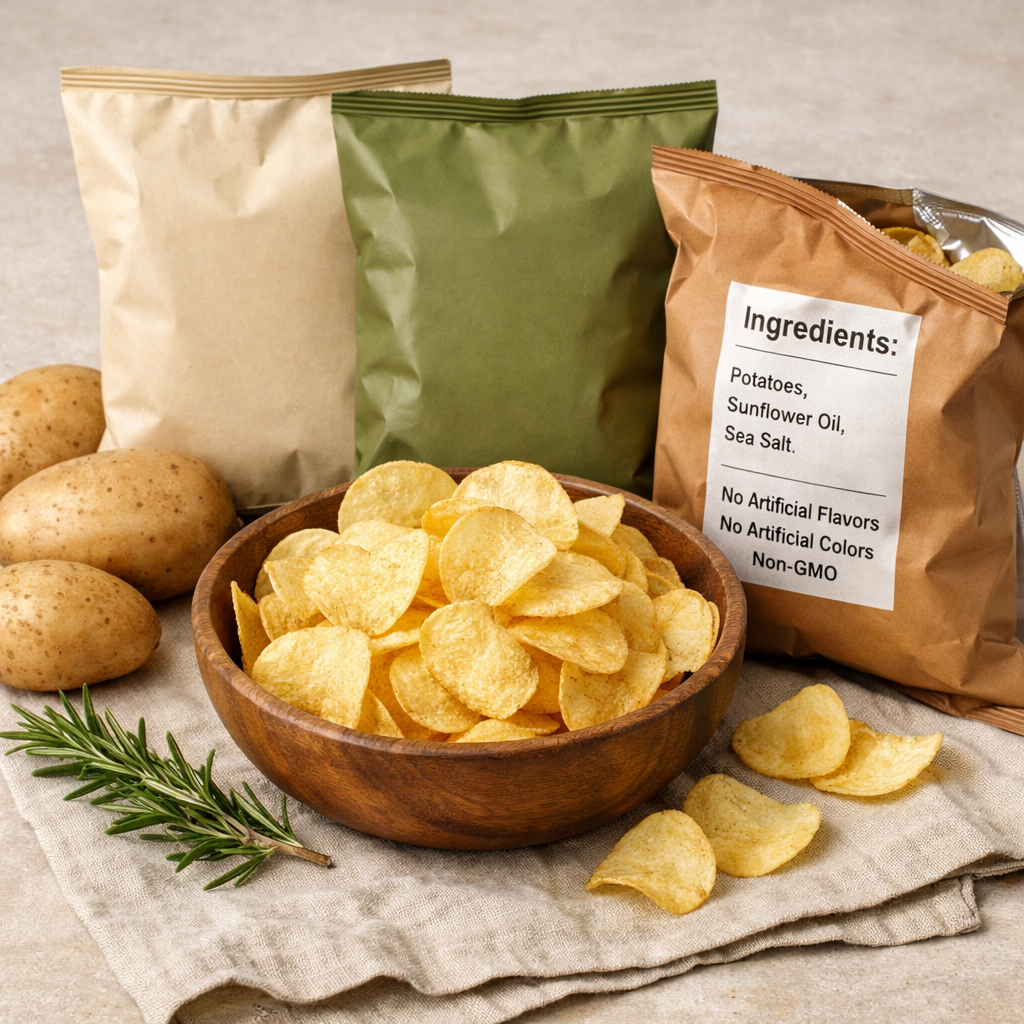
How to Choose Potato Chip Brands Without Artificial Colors or Flavors
Finding potato chips without artificial colors or flavors is easier when you know exactly what to scan on the bag. Start with the ingredient list (potatoes, oil, salt), confirm the oil and cooking method, and look for named plant-based color sources if chips are tinted. Then check a few nutrition numbers (calories, saturated fat, sodium), and validate on-pack claims or QR-linked details. As a rule of thumb, 1 oz of chips is about 152 calories, which helps standardize comparisons across brands and styles (USDA FNS Food Module). The steps below mirror Snack Comparison Hub’s quick-scan method for a consistent, confident choice in-store or online.
Quick start checklist
- Ingredients: Look for potatoes, oil, salt. Avoid any “artificial colors,” “artificial flavors,” or vague “colors.” Lay’s Lightly Salted is a simple example with a short list.
- Oil and method: Prefer avocado oil chips or olive oil chips; note baked/air-popped chips for lighter oil load, or kettle-cooked chips for thicker crunch.
- Color and flavor cues: For tinted chips, confirm named plant concentrates like spirulina or safflower rather than synthetic dyes.
- Nutrition basics: Compare per 1 oz (about one small bag): calories, total fat, saturated fat, and sodium; 1 oz averages ~152 calories.
- Claims to verify: “No artificial colors or flavors,” Non-GMO Project Verified, USDA Organic, Kosher. Scan any QR/NFC for sourcing and additive details.
- Texture check: Match expectations—crisp vs. oil-forward—based on cooking method and oil.
Clean-label chips are potato chips formulated without artificial colors or flavors. They rely on short, recognizable ingredient lists like potatoes, oil, and salt, sometimes using plant-based color sources. Clean-label emphasizes transparency, simple processing, and claims consumers can verify on-pack or via brand microsites.
Define your screening criteria
Use four pillars to avoid health halos and stay consistent. These pillars align with the Snack Comparison Hub framework for side-by-side comparisons:
- Ingredients: Potatoes listed first; no artificial colors or flavors; minimal list. A higher potato proportion commonly correlates with fewer additives and better crunch (signal of quality).
- Oil and method: Prefer avocado or olive oil; baked/air-popped chips often carry less oil; kettle-cooked changes texture and fat profile.
- Transparency: Look for explicit “No artificial” calls and use brand QR/microsites for sourcing and additive details.
- Nutrition and fit: Check sodium and fat per serving. Standardize to 1 oz ≈ 152 calories. Balance against your primary need-state—pleasure (39%), energy (36%), or goal support (25%).
Artificial colors and flavors are lab-made additives used to alter appearance or taste. Common synthetic dyes include Red 40, Yellow 5, and Blue 1. Clean-label alternatives rely on plant concentrates (like spirulina) or natural extracts and avoid petroleum-derived colorants.
Quality and need-state notes are supported by a quality-factor overview and consumer insights on snacking motivations (see a quality-factor explainer and healthy-snacking need-states from Glanbia).
Suggested criteria table (use for any chip you scan):
| Field | Target/Tip | Yes/No |
|---|---|---|
| Ingredients length | ≤ 3–5 items; potatoes first | |
| Oil type | Avocado or olive preferred | |
| Cooking method | Baked/air-popped (lighter) or kettle (thicker) | |
| Certifications | Non-GMO/Organic/Kosher if desired | |
| Sodium per serving | Aim ≤ 140–170 mg (compare like-for-like) | |
| Total fat per serving | Compare styles; note saturated fat | |
| Color source named | Plant pigments named (e.g., beet, annatto) | |
| Flavor source named | “Natural flavors” or specific seasoning listed |
Step 1: Read the ingredient list first
Confirm “no artificial” by starting with ingredients. Positive example: “Potatoes, vegetable oil, salt” (as on Lay’s Lightly Salted, which also advertises 50% less sodium vs. Classic). Red flags include “artificial colors,” “artificial flavors,” or unspecified “colors.” As a quality signal, a higher proportion of potato material often tracks with fewer additives and a cleaner, sturdier crunch (a practical cue for texture-focused shoppers). This is also the fastest filter in Snack Comparison Hub’s process.
Acceptable natural color terms you might see on veggie or tinted chips:
- Beet juice concentrate
- Annatto
- Turmeric
- Paprika extract
- Spirulina
- Safflower
Step 2: Verify oil type and cooking method
Oil and method shape both nutrition and texture:
- Oil: Avocado and olive oil are preferred picks for many clean-label potato chips because brands increasingly use them to differentiate better-for-you lines.
- Cooking method: Air-popped or baked chips often reduce oil load and often test well for lighter texture; kettle-cooked chips are thicker with a bigger crunch and may carry more fat depending on the recipe. Some trendy beef-tallow chips are also appearing online, but they tend to be higher in saturated fat—keep an eye on that number.
Step 3: Confirm color and flavor sources
If chips are brightly colored or strongly flavored, verify the sources:
- Look for named plant pigments (spirulina, beet, turmeric, annatto, paprika) and fruit/vegetable concentrates—many brands have reformulated away from synthetics using these ingredients.
- Visual cue: If the hue looks unusually vivid, confirm the label’s named natural pigments; don’t assume “no dyes.”
- Short packaging? Brand sites and QR/NFC links often disclose sourcing and additive status when there isn’t space on-pack.
Step 4: Check key nutrition numbers
Anchor comparisons to a standard serving so chips compete fairly. A quick benchmark: 1 oz of potato chips is about 152 calories (roughly one small bag). Note these per serving before comparing like-for-like styles:
- Calories
- Total fat and saturated fat
- Sodium
- Fiber and sugars
- Protein Use a simple “snapshot”—the same format Snack Comparison Hub uses—that flags higher sodium or saturated fat, with space to include estimated WW Points for chips.
Step 5: Validate claims and certifications
Confirm “No artificial colors or flavors” by cross-checking the ingredient panel. Consider third-party marks like Non-GMO Project Verified, USDA Organic, and Kosher to add confidence. Many plain chips are naturally gluten-free, but always confirm on the label. When available, scan QR/NFC for expanded details (oil source, suppliers, allergens). Regulatory scrutiny of ultra-processed additives is rising, with potential restrictions on certain dyes signaling a broader shift among CPG brands. This mirrors the verification step we emphasize at Snack Comparison Hub.
Step 6: Assess texture and taste fit
Set expectations before you buy:
- Taste tests note that some natural-positioned chips can lean oil-forward or differ in crunch; sample and compare crispness vs. oiliness.
- Try styles: Air-dried/air-fried or baked chips often deliver a lighter crunch; kettle-cooked brings dense, rugged texture and louder crunch.
- Match your need-state: If you’re after pure pleasure, a kettle chip might hit the spot; for everyday clean snacking or goal support, consider lighter oils and styles. Consumer data shows snacking motivations cluster around pleasure (39%), energy (36%), and goal support (25%).
Use Snack Comparison Hub’s label-scanning method
Do a 30-second scan on any bag:
- Ingredients length and order (potatoes first; “no artificial” present/absent)
- Oil type and cooking method icons (avocado/olive; baked/air-popped/kettle)
- Color/flavor source named?
- Sodium and saturated fat per serving
- Certifications present
Label scanning is a structured, repeatable way to extract key purchase factors from packaging in under 30 seconds. It prioritizes the ingredient list, additive flags, oil types, cooking methods, certifications, and 2–3 core nutrition metrics to enable quick, apples-to-apples product comparisons anywhere.
Pro tip for rich results: use consistent microcopy for fields (e.g., “Ingredients length,” “Oil type,” “Artificial colors: No”) to support AI and snippet visibility.
Build a side-by-side comparison
Below is a fast, atomic table for “no artificial” front-runners. We spotlight Lay’s Lightly Salted for its simple formula and reduced sodium; PopCorners for air-popped, no-artificial positioning with Non-GMO and gluten-free status; and Siete for avocado oil and a three-ingredient build. Terra Original shows how vegetable color sources can be entirely plant-based.
| Product | Ingredients (short list) | Artificial colors/flavors | Oil type | Method | Sodium/serv. | Est. WW Points | Certifications | Texture notes |
|---|---|---|---|---|---|---|---|---|
| Lay’s Lightly Salted | Potatoes, vegetable oil, salt | No/No | Sunflower/corn/canola | Fried | 85 mg | 4–5 | — | Classic light crunch |
| PopCorners Sea Salt | Corn, sunflower oil, sea salt | No/No | Sunflower | Air-popped | 90–110 mg | 3–4 | Non-GMO, gluten-free | Ultra-light, airy crunch |
| Siete Potato Chips (Sea Salt) | Potatoes, avocado oil, sea salt | No/No | Avocado | Kettle-cooked | 140–160 mg | 5 | — | Thick, sturdy, clean finish |
| Terra Original Vegetable | Root veggies, safflower/canola oil, salt | No/No | Safflower/canola | Fried | 50–80 mg | 5–6 | — | Dense crunch; colors from real vegetables |
Notes:
- Lay’s Lightly Salted lists a short ingredient deck and has 50% less sodium than Classic.
- PopCorners are air-popped and positioned as free from artificial flavors, colors, or preservatives, with Non-GMO and gluten-free claims highlighted in taste-test roundups.
- Siete kettle chips emphasize three simple ingredients and avocado oil.
- Terra’s hues come from whole vegetables rather than added dyes.
Create a nutrition snapshot with estimated WW Points
Use this mini panel to make calorie and sodium comparisons instant—the same snapshot format used across Snack Comparison Hub. Values vary by flavor; treat Points as estimates.
| Product | Serving (oz/g) | Calories | Total fat | Sat fat | Sodium | Fiber | Protein | Sugars | Est. WW Points |
|---|---|---|---|---|---|---|---|---|---|
| Lay’s Lightly Salted | 1 oz / 28 g | 160 | 10 g | 1–1.5 g | ~85 mg | 1 g | 2 g | 0 g | 4–5 |
| PopCorners Sea Salt | 1 oz / 28 g | 130 | 3 g | 0–0.5 g | 90–110 mg | 1 g | 2 g | 0 g | 3–4 |
| Siete Potato Chips (Sea Salt) | 1 oz / 28 g | 150 | 9 g | 1–1.5 g | 140–160 mg | 1 g | 2 g | 0 g | 5 |
| Terra Original Vegetable | 1 oz / 28 g | 150 | 9 g | ~1 g | 50–80 mg | 2–3 g | 1 g | 2–3 g | 5–6 |
Method note: WW Points estimates consider calories, saturated fat, sugar, and protein and can vary by flavor. Use ranges, then verify in your WW app before tracking.
Badge ideas: flag “≤140 mg sodium/serving,” “≤1.5 g sat fat,” or “≤150 calories” to surface standouts quickly.
Interpreting pros and cons for clean-label chips
Pros:
- Short, recognizable ingredient lists; plant-based color sources; Non-GMO/Organic options available.
- Preferred oils (avocado/olive) and lighter cooking methods (air-popped/baked) widen cleaner choices.
Cons:
- Some have higher sodium or saturated fat; others shift texture (denser crunch) or taste slightly oil-forward.
- Premium pricing and fewer bold flavors when avoiding artificial additives.
Quick tip: If crunch is your non-negotiable, higher potato content is a reliable quality signal for sturdier texture.
Budget and availability considerations
- Compare store brands that publish full ingredient transparency; some mimic national-brand packaging, so always read the panel carefully.
- Cut per-serving cost using multi-packs or larger bags, then portion out with pre-weighed servings to stay on track.
- Be flexible: air-popped corn chips like PopCorners often meet “no artificial” criteria and are widely available if your favorite potato chips are out.
Common pitfalls and how to avoid them
- Vivid color assumptions: Don’t assume bright hues are natural—confirm named plant pigments like spirulina, beet, or annatto. Many brands now replace synthetics with plant concentrates.
- Calorie-only comparisons: Standardize to 1 oz ≈ 152 calories, then check sodium and saturated fat to avoid misleading comparisons.
- Ignoring sensory fit: Note cooking method and oil to predict crunch and oiliness; some natural-positioned chips can taste more oil-forward—sample before stocking up.
Frequently asked questions
What does “no artificial colors” mean if natural colors are included?
It means no petroleum-derived synthetic dyes are used; plant-based pigments like beet or spirulina are acceptable. Use Snack Comparison Hub’s quick-scan checklist to confirm named sources on the ingredient list.
How can I quickly tell if a chip uses synthetic dyes or flavors?
Scan for dye names like Red 40, Yellow 5, or Blue 1, and for “artificial flavors.” Snack Comparison Hub’s label scan prioritizes these flags so you can verify in seconds.
Are olive oil or avocado oil chips always healthier?
Not automatically. Snack Comparison Hub recommends comparing serving size, saturated fat, and sodium within the same style before deciding.
Do baked or kettle-cooked chips have fewer additives?
Not by default. Snack Comparison Hub’s method treats cooking method and additives separately, so read ingredients and check the Nutrition Facts panel.
Are “natural flavors” acceptable on a clean-ingredient chip?
Many clean-label chips use natural flavors, but preferences differ. Snack Comparison Hub suggests prioritizing recognizable seasonings if you want the simplest formulas.