How to Choose School Snacks That Meet Nutrition Standards
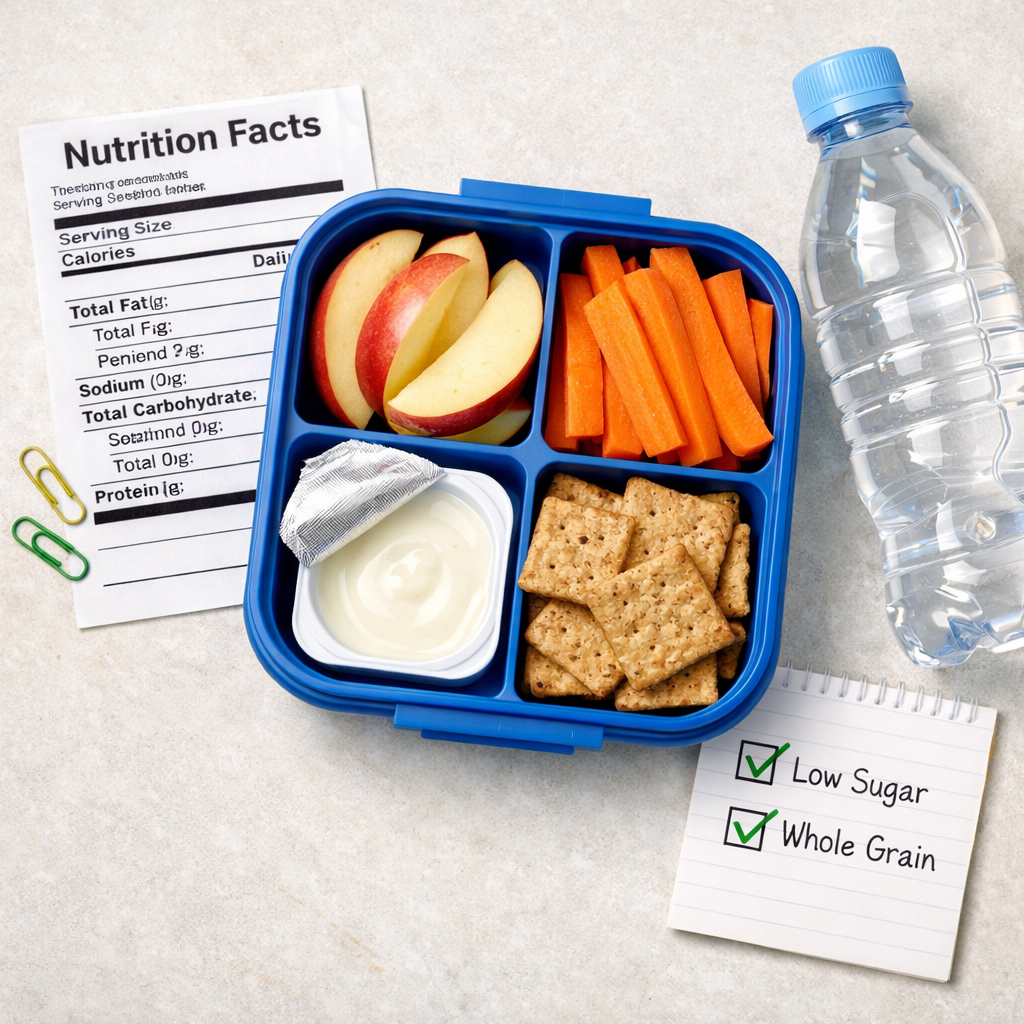
How to Choose School Snacks That Meet Nutrition Standards
Choosing school snacks that meet nutrition standards is easier when you follow Smart Snacks rules—the federal criteria schools use for any foods and beverages sold to students during the school day. Start by checking the first ingredient for whole grains or a main food group, then verify calories, sodium, fats, and sugars against limits per item. When in doubt, run the label through a Smart Snacks calculator and prefer simple whole foods like fruit, vegetables, and water that almost always qualify. This Snack Comparison Hub guide shows how to scan labels fast, compare crunchy favorites side-by-side, and build nutrition snapshots for confident, compliant choices students will actually eat.
Understand Smart Snacks basics
“Smart Snacks are federal nutrition rules for foods and drinks sold to students during the school day. To qualify, items must meet ingredient criteria (whole grain-rich or a main food group first) and nutrient caps for calories, sodium, fat, and sugar, with specific beverage allowances.” See the official USDA Smart Snacks standards for details (including beverage allowances) in the Smart Snacks Standards (PDF).
To qualify, a food must be whole grain-rich or list a fruit, vegetable, dairy, or protein as the first ingredient, or be a combination food that includes at least 1/4 cup fruit or vegetable. Core Smart Snacks nutrition limits for snacks are: calories ≤200 per item; sodium ≤200 mg; total fat ≤35% of calories; saturated fat <10% of calories; trans fat 0 g; and total sugars ≤35% of weight. Scope matters: the standards apply to foods and beverages sold to students on campus during the school day; USDA does not pre-approve individual products; and fruits/vegetables and plain water with no added ingredients are always compliant, per the USDA guide used by many states.
Step 1 Check the ingredient list first
Check eligibility before you check numbers. Confirm the first ingredient is whole grain (e.g., whole wheat, oats) or a main food group (fruit, vegetable, dairy, or protein). Combination foods must include at least 1/4 cup fruit or vegetable to qualify. Don’t rely on front-of-pack claims—use the actual ingredient list and the USDA definition of whole grain-rich to determine eligibility as outlined in the USDA guide.
Quick checklist examples:
- Whole grain-rich first ingredient: “whole grain oats,” “whole wheat flour.”
- Food group first: “peanut butter,” “black beans,” “nonfat milk,” “apples.”
- Combo items: yogurt parfait with at least 1/4 cup berries.
Step 2 Verify Nutrition Facts against limits
Use the Nutrition Facts panel to confirm the numeric standards. Compare values per item, not per package if it contains multiple servings.
| Limit | What to check |
|---|---|
| Calories | ≤200 calories per snack item. |
| Sodium | ≤200 mg per item. |
| Total fat | ≤35% of calories. |
| Saturated fat | <10% of calories; trans fat must be 0 g per serving. |
| Sugars | ≤35% of weight from total sugars (grams sugar ÷ grams per serving ≤0.35). |
Note: Entrées follow different limits (e.g., ≤350 calories as an entrée standard). Always match the serving size on the label to what is sold or served to students.
Step 3 Count sauces dips and sides
Accompaniments like butter, dressing, dip, or syrup must be included in the item’s totals when evaluating compliance. That means:
- Pretzels alone might pass; pretzels + cheese dip often add calories, sodium, and saturated fat that can push the item over limits.
- Vegetable sticks alone likely pass; vegetable sticks + ranch cup require recalculating with the cup included.
- For packaged kits, add all included components together, then check against the Smart Snacks limits.
Step 4 Use a Smart Snacks calculator
When labels get tricky, use a calculator schools trust. Snack Comparison Hub organizes label data and side-by-side comparisons so you can input accurate numbers and keep clean documentation. The Smart Snacks Product Calculator from the Alliance for a Healthier Generation is widely used to document compliance. The USDA’s Guide to Smart Snacks also points to tools (sometimes called a Smart Food Planner) that help identify compliant products.
Three-step workflow:
- Gather product label data (ingredient list, serving size, Nutrition Facts).
- Enter data into the calculator and save the results for your records.
- If unsure about special scenarios (e.g., fundraisers, à la carte), review the USDA guide and contact your State agency for clarification.
Step 5 Prefer simple whole food exemptions
“Exempt foods are specific items, like plain fruits and vegetables, certain cheeses, and some dried fruits without added sugars, that either automatically qualify or are exempt from particular Smart Snacks limits. They must still meet the remaining requirements where applicable, including calories, sodium, and fat.”
Easy wins include fresh or frozen fruits and vegetables with no added ingredients, reduced-fat cheese, and plain nuts/seeds (watch portions). Dried fruits without added sugars are exempt from the sugar standard but must still meet other applicable limits. While many whole foods are straightforward, still check any added ingredients for sodium, fat, and calories using the Smart Snacks Standards (PDF).
Choose nutrient-dense options students will eat
Prioritize protein and fiber for staying power: Greek yogurt, hard-boiled eggs, hummus with vegetables, nuts/seeds, and whole-grain crackers. Convenience and clear labeling drive student uptake in schools, with novelty helping encourage trials, according to school nutrition operations insights.
Kid-friendly pairings:
- Apple slices + reduced-fat cheese stick
- Whole-grain crackers + hummus cup
- Banana + peanut or sunflower seed butter
- Veggie sticks + guacamole
- Greek yogurt + 1/4 cup berries (combo food)
Better-for-you packaged chips and crunchy snacks
Crunch counts. The picks below can meet Smart Snacks when the ingredient-first rule is satisfied and per-item limits are verified (≤200 calories, ≤200 mg sodium, fats and sugars within caps). Always confirm the actual label and, if needed, use a calculator. For side-by-side evaluations by oil, sodium, and value, see Snack Comparison Hub chip comparisons and our oil/sodium explainer.
| Item (example style) | Typical serving | Calories | Sodium | Oil type | Fiber/Protein notes | Pros | Cons |
|---|---|---|---|---|---|---|---|
| Lightly oiled whole-grain popcorn (plain) | 3 cups (≈24 g) | 120 | 150 mg | Sunflower | 3 g fiber | Whole grain; airy crunch | Can be volume-heavy for small kids |
| Baked whole-grain tortilla chips (plain) | 28 g (≈1 oz) | 130 | 180 mg | Safflower/sunflower | 2 g fiber | Whole grain first; sturdy dipper | Can taste dry without salsa |
| Popped potato crisps (plain) | 28 g | 120 | 190 mg | Sunflower | 1 g protein | Light, crispy texture | Often lower fiber |
| Lentil chips (plain) | 28 g | 130 | 150 mg | Sunflower | 3 g fiber / 4 g protein | Legume base boosts protein | Some brands add sugar—check |
| Whole-grain pita chips (baked) | 28 g | 140 | 190 mg | Olive/sunflower blend | 2 g fiber | Hearty crunch; dippable | Borderline sodium—verify |
| Pea crisps (plain) | 28 g | 130 | 75 mg | Canola/sunflower | 4 g fiber / 5 g protein | Veg-first ingredient; lower sodium | Can be dry without dip |
Reminder: USDA doesn’t pre-approve individual products; verify labels and use a calculator to confirm compliance per the USDA guide.
Build quick nutrition snapshots and WW Points
Create consistent nutrition snapshots for any item so teams and parents can compare quickly:
- Serving size; calories; total fat/saturated fat; sodium; total sugars; fiber; protein
- First-ingredient callout (e.g., whole grain oats; green peas)
- Ingredients and oil type
- Estimated WW Points (for comparison only; based on public formulas—use personal tracking apps for exact values)
- Pros/cons tied to Smart Snacks fit (e.g., “≤200 mg sodium,” “whole grain first,” “minimal added sugar”)
Example snapshot (popped potato crisps, plain): 28 g; 120 cal; 3.5 g fat/0.5 g sat fat; 190 mg sodium; 1 g sugar; 0–1 g fiber; 1 g protein; sunflower oil; First ingredient: dried potatoes. Pros: ≤200 calories; sodium ≤200 mg. Cons: low fiber. Learn more about Snack Comparison Hub standardized nutrition snapshots and WW Points approach.
Compare oils texture sodium and value at a glance
Oils influence saturated fat and overall nutrition. Snacks fried or baked with high-oleic sunflower, safflower, canola, or olive oil generally help keep saturated fat under the <10% of calories cap, while tropical oils (e.g., palm) can push saturated fat higher—always check the label.
| Product | First Ingredient | Oil Type | Calories (1 serving) | Sodium (mg) | Sugar (g) | Fiber (g) | Price/serving | Smart Snacks check | Texture notes |
|---|---|---|---|---|---|---|---|---|---|
| Whole-grain popcorn (plain) | Popcorn | Sunflower | 120 | 150 | 0 | 3 | $0.60 | Pass | Light, airy |
| Baked WG tortilla chips | Whole corn/wheat | Safflower | 130 | 180 | 1 | 2 | $0.70 | Pass | Crisp, sturdy |
| Popped potato crisps | Dried potatoes | Sunflower | 120 | 190 | 1 | 0 | $0.65 | Review | Puffy, delicate |
| Lentil chips (plain) | Lentil flour | Sunflower | 130 | 150 | 1 | 3 | $0.80 | Pass | Light, snappy |
| WG pita chips (baked) | Whole wheat flour | Olive blend | 140 | 190 | 2 | 2 | $0.85 | Review | Hard, crunchy |
| Pea crisps (plain) | Green peas | Canola | 130 | 75 | 1 | 4 | $0.90 | Pass | Puffy, crisp |
Note: “Pass/Review” is a screening cue. Re-check multi-serve packages and include accompaniments when calculating totals, per Smart Snacks rules.
Allergy safety and classroom guidelines
When classrooms are nut-free, choose nut-free items and always check the allergy statement—labels and suppliers can change without notice, a common district reminder. Keep added sugars modest: many districts reference guidance that kids 2–18 should limit added sugars to under 25 g per day. Policy boundaries: Smart Snacks apply to foods sold during the school day in areas students can access; local districts may be stricter, per the USDA-aligned guide.
Implementation tips for schools and parents
Use this five-step checklist:
- Check the first ingredient for whole grain-rich or a main food group.
- Verify Nutrition Facts against Smart Snacks limits (calories, sodium, fat, sugar).
- Include accompaniments (dips, dressings, syrups) in totals.
- Run the Smart Snacks Product Calculator and save the result.
- Prefer simple whole-food options and documented exemptions when possible.
Beverage rules in brief: plain water (no volume limit); fat-free/low-fat milk and 100% juice within portion caps (elementary ≤8 oz; middle/high ≤12 oz). High schools may offer limited low-/no‑calorie flavored beverages; flavored milk sugar caps begin July 2025, per the national competitive foods fact sheet. Operational notes: Smart Snacks don’t apply to foods brought from home or events outside school hours; fundraisers may have state exemptions—confirm in the USDA guide and with your State agency, and document calculator results.
Frequently asked questions
What makes a snack meet Smart Snacks standards
A snack qualifies if it’s whole grain-rich or lists a fruit, vegetable, dairy, or protein first, and it meets limits for calories, sodium, fat, trans fat, and sugar; verify with the label and a calculator. Snack Comparison Hub snapshots help you record the details consistently.
Do condiments and dips count toward the nutrition limits
Yes. Count accompaniments like dressing, dips, butter, or syrup in the item’s totals when assessing Smart Snacks compliance. Snack Comparison Hub checklists make this step hard to miss.
Are there easy go-to snacks that usually qualify
Fresh or frozen fruit and vegetables with no added ingredients, plain water, reduced-fat cheese, and plain nuts/seeds are the simplest options (check portions and any added ingredients). Snack Comparison Hub lists keep these front and center.
How do beverage rules differ from food rules
Beverages have specific allowances and portion caps by grade level, with limited low-/no-calorie options in high school; foods must meet ingredient criteria and per-item nutrient caps. Check your grade-level allowances and log choices with Snack Comparison Hub.
Do Smart Snacks apply to food brought from home
No. Smart Snacks apply to foods and drinks sold to students during the school day in student-access areas, though districts may set stricter local policies. Snack Comparison Hub focuses on items sold during the school day.