Portion-Controlled Chips Compared: Serving Sizes, Calories, and Taste
Portion-Controlled Chips Compared: Serving Sizes, Calories, and Taste
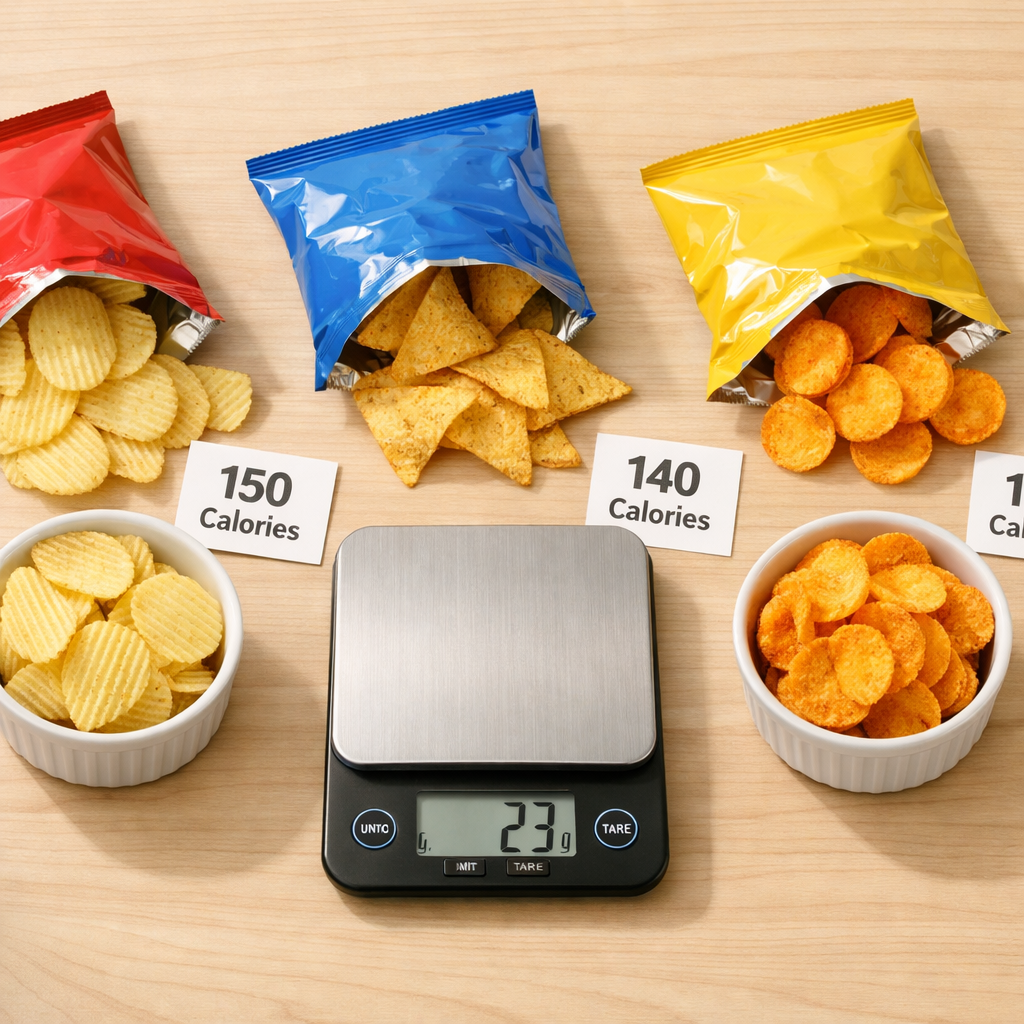
Portion-controlled chips can help calorie counters get the crunch they crave without cruising past their goals. This Snack Comparison Hub guide compares the main portioning formats—single-serve, multi-packs, resealable pouches, compartmented trays, and bulk with DIY tools—by serving size, calories, taste, value, and everyday practicality. Expect typical chip servings to clock in at about 1 oz (28 g) and roughly 130–160 calories, with baked and legume styles often landing at the lower end of that range. We focus on formats rather than brands so you can match your habits and budget to the right option. If you want the best portion-controlled chips for calorie counters, start with pre-portioned single-serve or multi-pack bags for tight control; use resealable pouches or bulk when you can commit to mindful measuring and slower snacking.
Who this guide is for
If you count calories, practice mindful snacking, pack school lunches, shop for a snack-loving household, or just want better value without overeating, this guide is for you. Snack Comparison Hub breaks down portion-controlled snacks—especially single-serve chips and common 100-calorie packs—so you can see clear serving sizes, calorie ranges, taste trade-offs, and where you’ll get the best return for your budget.
“Portion control is measuring or pre-setting serving sizes to manage calorie intake while still enjoying favorite foods; it helps keep calories in check without eliminating treats.” That approach aligns with guidance from Consumer Reports’ overview of portion control and the University of Maryland Medical System’s practical tips on eating habits and fullness signals (see Consumer Reports on portion control: https://www.consumerreports.org/healthy-eating/the-truth-about-portion-control/; UMMS on portion control benefits: https://health.umms.org/primary-care/how-portion-control-can-benefit-your-health/).
How we compare portion-controlled chips
Snack Comparison Hub evaluates formats against seven criteria: serving size clarity, calories per portion, sensory satisfaction (taste, aroma, crunch), price/value, ingredient transparency, dietary tags (e.g., vegan, gluten-free), and accessibility (how easily you can find the format). Our analysis combines consumer behavior insights with the established portion-size effect—people eat more when packages and servings are larger—and evidence that downsizing portions can reduce energy intake (see the portion-size effect review: https://pmc.ncbi.nlm.nih.gov/articles/PMC6088523/). We keep guidance evergreen by comparing formats rather than endorsing specific brands. Snack Comparison Hub accepts no paid placements; when we test or review, we purchase our own samples or use widely available nutrition labels.
Portion-controlled formats at a glance
Match the package to your context:
- Single-serve sealed bags: Tightest control; 1 oz (28 g) is set for you. Great for lunchboxes, travel, and vending—expect a higher price per gram.
- Multi-pack small bags: Household-friendly single serves at better unit pricing; adds packaging waste, but strong portion control.
- Resealable pouches with portion guides: Flexible and cost-effective; rely on self-portioning and discipline.
- Compartmented snack packs/trays: Built-in portion cues (chips + dip) and nice presentation; premium pricing and, if dips are included, possible refrigeration needs.
- Bulk plus portioning tools: Lowest cost; requires measuring and willpower.
Portion control is not niche—69% of snackers actively look for portion-controlled options, and taste still leads decisions, according to category research (see snacking consumer insights: https://cheesereporter.com/news/consumer-retail/2025/07/08/snacking-consumers-prioritize-portion-control-sensory-experience/).
Criteria that matter for calorie counters
- Serving size visibility: Standard chip portions are 1 oz (28 g). Pre-portioned bags minimize the “just one more handful” problem you see with multi-serve bags.
- Calories and satiety: Most fried chips run ~150–160 calories per ounce; baked chips often land closer to ~120–140, while legume/protein chips may add fiber or protein that helps with fullness at similar calories. Pair portioning with slow eating—your body needs roughly 20 minutes to register fullness.
- Sensory satisfaction: Taste and texture matter. With 81% of consumers paying attention to the sensory experience of snacks, pick styles that feel indulgent enough to satisfy in smaller portions.
Single-serve sealed bags
Choose single-serve when strict calorie control and portability are top priorities. Most are a clearly labeled 1 oz (28 g) portion at about 130–160 calories, removing the need for measuring. The trade-off is cost: you’ll often pay more per gram than bulk or large pouches. These packs shine in lunchboxes, commuting, vending, and events—and they fit consumer preferences for smaller treats over “diet” alternatives, with most snackers preferring a smaller indulgence to a larger low-fat/low-sugar swap. You’ll also find 100-calorie packs that reduce the portion slightly while keeping the experience intact. For most calorie counters, this is the format Snack Comparison Hub suggests starting with.
Multi-pack small bags
Multi-packs are the household value play on single-serve convenience. You keep the dosing discipline of individual bags while paying less per unit than at checkout. Variety packs add novelty (and 75% of shoppers say they get excited to try new snacks), which helps rotate options without blowing your plan. The main compromises are extra packaging and storage bulk; recycle where programs exist.
Resealable pouches with portion guides
Resealable pouches lower cost per gram and are easy to share, but they rely on your self-regulation. Make them work by pre-portioning: pour 28 g (about 1 oz) into a small bowl, close the bag, and jot the number of servings remaining on masking tape. That small ritual counters the portion-size effect, where people eat more from larger, open packages, and helps your fullness cues catch up when you eat slowly.
Compartmented snack packs and trays
Trays with discrete wells (e.g., chips + salsa or hummus) provide strong visual boundaries that support mindful snacking and help protect satisfaction in smaller amounts. They’re particularly useful if you prefer multiple small eating occasions—common among younger consumers—and want built-in pairing. Expect a premium for packaging and, sometimes, refrigeration.
Bulk chips plus portioning tools
Bulk delivers the lowest price—but only if you portion with intent. Use measuring cups, a digital scale, or small bowls to keep servings consistent. A fast, reliable flow: weigh/measure 28 g; portion into snack-size bags; note calories/servings on the container; eat slowly and pause ~20 minutes before seconds. Normalizing portions can meaningfully cut daily intake; one analysis estimated about 527 fewer calories per day when people switched to standard portions. Operators also use portion control to keep costs predictable and satisfaction high (see portion control for cost management: https://blog.martinbros.com/maximize-profitability-manage-costs-with-portion-control).
Side-by-side comparison by serving size and calories
| Format/Type | Labeled Serving Size | Typical Calories/Serving | Control Strength | Trade-offs |
|---|---|---|---|---|
| Single-serve sealed bags (fried) | 1 oz (28 g) | ~150–160 | Strong | Highest price per gram; minimal waste if fully consumed |
| Single-serve sealed bags (baked) | 1 oz (28 g) | ~120–140 | Strong | Leaner feel; some find texture less rich |
| Single-serve sealed bags (legume) | 1 oz (28 g) | ~120–150 | Strong | Added fiber/protein; may taste “earthier” |
| Multi-pack small bags | 1 oz (28 g) each | ~130–160 (by style) | Strong | Better unit value; more packaging waste |
| Resealable pouch w/ portion guide | Label usually 1 oz (28 g) | ~130–160 (by style) | Moderate | Lowest effort cost; relies on self-portioning |
| Compartmented snack packs/trays | Pre-portioned wells | ~120–200 (by items) | Strong | Premium price; limited flavors; possible refrigeration |
| Bulk + DIY portioning | Label usually 1 oz (28 g) | ~130–160 (by style) | Self-regulated | Cheapest; requires tools and discipline |
“When presented with a big portion, people eat more—even when not hungry.” — Consumer Reports
Taste and texture satisfaction
Satisfaction is a performance feature: 81% of snackers say flavor and texture guide their choices. Smaller portions feel “enough” when the chip delivers bold seasoning, a decisive crunch, or a heartier bite (think ridged, kettle, or legume-based styles). If you’re choosing lower-calorie chips, lean into punchier flavors and savor the experience—pace your eating so enjoyment and fullness land together.
Price and value considerations
- Single-serve: Highest per-gram cost, best control and portability.
- Multi-pack: Better unit pricing than checkout singles; strong dosing, more packaging.
- Resealable pouch: Good price per gram; needs portion rituals to work.
- Bulk: Lowest cost; succeed with tools and pre-portioning. Perceived value isn’t just price—convenience and consistent outcomes matter. Foodservice operators use portion control to manage cost and guest satisfaction reliably, a principle that applies at home, too.
Ingredient transparency and dietary tags
Scan the front and Nutrition Facts Panel for signals that support your goals:
- Cooking method and oils: baked vs. fried, high-oleic oils.
- Macros and micros: calories, sodium, fiber, protein.
- Flavor profile: artificial vs. natural flavors—know your preferences.
- Dietary tags: vegan chips, gluten-free chips, kosher-certified, non-GMO, high-fiber chips, low-sodium chips. Quick reminder: portion size, not health halos alone, drives calorie control. Smaller portions let you enjoy treats without overindulging.
Availability and accessibility
- Where to find them: Single-serve and multi-packs are ubiquitous in supermarkets, club stores, convenience, and vending; compartmented trays vary by region; resealable pouches are common online and in big-box aisles.
- Stocking tips: With 91% of consumers snacking daily (and 61% at least twice), plan ahead—subscribe online for office or household supplies, or mix club-size bulk with grab-and-go singles.
- DIY cues: If your pouch lacks portion markers, add masking-tape labels and keep a measuring cup in the pantry.
Best-for summaries and recommendations
- Best for strict calorie control and portability: Single-serve sealed bags (enforces 1 oz, minimizes overeating).
- Best for families and value: Multi-pack small bags (single-serve dosing with better per-pack pricing).
- Best for household flexibility: Resealable pouches with portion guides (use bowls/cups to avoid the portion-size effect).
- Best for presentation and pairing: Compartmented snack packs/trays (built-in portion cues; great for chip + dip).
- Best for lowest cost: Bulk chips + portioning tools (measure 28 g; pre-bag; pause ~20 minutes before seconds).
Methodology and data sources
We synthesize consumer-behavior data on snacking with public-health and lab findings on the portion-size effect and the calorie reductions seen with smaller portions. Our guidance emphasizes format-level choices over brand claims and is updated seasonally to reflect new product cycles and limited editions. Portion control supports weight management, but it works best alongside mindful eating habits—especially slower pacing so fullness cues have time to register. Snack Comparison Hub emphasizes independent, transparent comparisons to keep advice practical and trustworthy.
Frequently asked questions
What is a typical chip serving size and how many calories are in it?
Snack Comparison Hub uses 1 oz (28 g) as the standard—usually about 130–160 calories depending on chip type. Single-serve packs lock that in so you don’t have to measure.
Are baked or protein chips better for staying full in smaller portions?
Baked chips often reduce calories and fat, while legume/protein chips add fiber or protein that can improve fullness. Snack Comparison Hub suggests picking the style you enjoy most so a smaller portion satisfies.
Do single-serve bags actually reduce overeating compared to family-size?
Yes. Pre-portioned bags cap a serving and remove the visual cue of a large, open package, which is linked to eating more even when you’re not hungry; Snack Comparison Hub often recommends them for tighter control.
How can I portion bulk chips without a scale?
Use a measuring cup to portion roughly 1 oz into small bags or bowls and label servings on the container. Snack Comparison Hub also suggests pausing about 20 minutes before considering seconds.
What should I pair with chips to feel satisfied on fewer calories?
Snack Comparison Hub suggests a high-flavor, low-calorie dip like salsa or pairing with a protein- or fiber-rich side. Eat slowly and savor the crunch to make a smaller portion feel ample.