The Best-Tasting, Most Reliable Potato Chip Brand for Everyday Snacking
The Best-Tasting, Most Reliable Potato Chip Brand for Everyday Snacking
Finding the best-tasting, most reliable potato chip brand overall comes down to three fast choices: your preferred texture (classic, kettle, or ridged), your salt tolerance, and how consistent the chips are week to week. In broad testing, large national brands tend to deliver the most consistent quality bag after bag, which is why they dominate “best overall” picks across panels, with Lay’s Classics and Wavy for everyday and dipping, and Kettle Brand Sea Salt for hearty crunch, while Trader Joe’s Ode to the Classic impresses for balance and value (as echoed by Wirecutter, Serious Eats, and food editor panels). Snack Comparison Hub distills cross-panel blind tests into practical buying cues. To help you buy confidently in under a minute, Snack Comparison Hub includes a rapid label-scan checklist, a side-by-side comparison table, nutrition snapshots with estimated WW Points, and clear pros and cons.
How we define best tasting and most reliable
We judge on two axes: taste excellence and reliability. Taste excellence means clean, potato-forward flavor, balanced salt, and the “right” texture for the style—melt-in-the-mouth for classic, strong crunch for kettle. Multiple blind taste tests favored chips with distinct potato character, even salting, and a satisfying, style-true bite, including panels at Serious Eats and Wirecutter.
“Best overall potato chip” means a brand that most snackers can buy regularly and enjoy repeatedly: it tastes distinctly of potatoes, has just-right salt, and a dependable texture profile, with consistent quality bag-to-bag and strong availability across stores and sizes. This is the standard we use across Snack Comparison Hub guides.
Rapid label scan criteria for everyday chips
Use this 30-second checklist from Snack Comparison Hub to predict taste, crunch, and nutrition before you buy:
- Ingredient simplicity: look for potatoes, oil, salt. Most plain chips have exactly three ingredients (a common marker in blind-test favorites highlighted by Serious Eats).
- Oil type: classic chips often use sunflower/corn/canola; kettle chips frequently use sunflower, safflower, and/or canola blends.
- Sodium per serving: check mg per 28g (1oz).
- Serving size weight: many bags list nutrition “per 28g”; confirm you’re comparing like for like.
- Freshness date and bag integrity: air leaks dull the crunch fast.
Chipping potatoes are higher-starch, lower-moisture varieties bred and stored for frying performance, producing evenly golden chips with a uniform, delicate shatter and minimal browning. Processors value their predictable slice integrity, low sugar (less scorching), and crisp texture that holds up from fryer to shelf, per Food & Wine’s chip tasting and industry notes.
Suggested sodium targets by use case:
- Daily driver: about 120–150mg per 28g
- Flavor-first: roughly 150–220mg per 28g Most plain chips stick to three ingredients—deviations often signal flavored or “artisan” styles.
Taste and texture benchmarks from blind tests
Most panels used freshly opened bags and masked plates to avoid brand bias and staleness, preserving accurate crunch and aroma, a common method described in the DoorDash tasting roundup. Clear benchmarks emerged:
- Kettle Brand Sea Salt: praised for “homemade,” potato-skin notes and deeply satisfying crunch; a top finisher in the Serious Eats potato chips taste test.
- Lay’s Classic and Lay’s Wavy: thin, evenly salted, and clean-tasting; Wavy was singled out as “pristine” for dipping in Wirecutter’s guide.
- Trader Joe’s Ode to the Classic: an editor-favorite for balanced salt and potato flavor in Simply Recipes’ blind test.
These potato chip blind test results point to practical cues in-store: three ingredients, moderate sodium, and style-true texture are reliable predictors of consistent chip quality. These benchmarks align with Snack Comparison Hub’s evaluation criteria.
Classic thin chips for broad appeal
Classic chips emphasize a light, quickly crisp bite that melts on the tongue and pairs well with sandwiches.
- Lay’s Classic: thin, crispy, evenly salted; frequently called the quintessential American chip by Allrecipes’ panel.
- Trader Joe’s Ode to the Classic: a balanced, potato-forward pick favored by editors in Simply Recipes’ blind tasting.
- Amazon Fresh Classic: noted for light crisp and clean flavor in Wirecutter’s tests.
Fit: Choose classic chips when you want universal appeal and a clean, even salting that won’t overpower lunch or a party spread.
Kettle cooked chips for hearty crunch
Classic chips are cooked quickly at higher temps; kettle chips are cooked in batches at lower temps for longer, which builds thicker walls, more bubbles, and a deeper, sturdier crunch, as summarized in DoorDash’s tasting guide.
- Kettle Brand Sea Salt: consistently lauded for its rustic, “homemade” potato flavor and robust, craggy crunch, topping Serious Eats’ evaluations.
- Oil blends for kettle styles commonly include sunflower, safflower, and/or canola.
Trade-offs: thicker chips can read slightly under-salted to some tasters; sea salt variants often strike the best balance across panels.
Ridged chips for dips and sturdiness
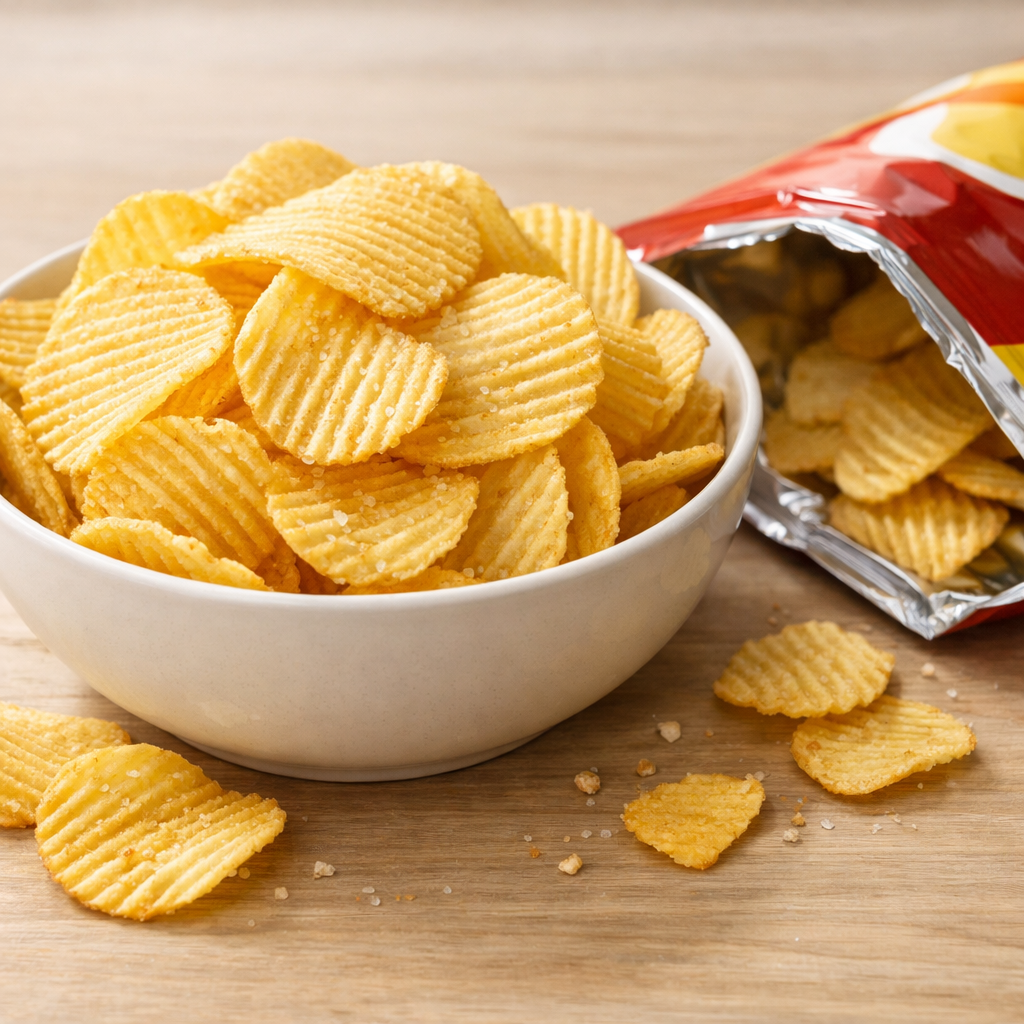
Ridged chips are the structural choice—deeper grooves mean more dip-holding power and a louder crunch. Wavy cuts offer a gentler, dip-ready bite; thick-cut ridges maximize sturdiness.
- Ruffles are a long-standing gold standard for crinkle-cut sturdiness with dips, as noted by Food & Wine.
- Wirecutter called Lay’s Wavy Original “pristine” for dipping.
- Store examples like Walmart’s Great Value often test thicker and hold up well to hearty dips, according to Southern Living’s tasting notes.
Store brands and value picks
Value chips can rival national brands for everyday reliability:
- Amazon Fresh Classic earned praise for a light crisp and clean flavor in Wirecutter’s testing; some private labels even outperformed pricier European chips in blind comparisons.
- Trader Joe’s Ode to the Classic won an editor blind test at Simply Recipes for balance and broad appeal.
- Packaging cues sometimes mimic the iconic “yellow bag” silhouette to signal a classic identity, a branding dynamic explored by Brian Francis’s analysis.
If you prioritize consistent chip quality on a budget, these store brands are worth a repeat-buy trial.
Reliability factors beyond flavor
Week-to-week consistency depends on potato variety, moisture control, oil type, and tightly controlled cook times and temperatures—variables processors manage to hit the same texture and color with each batch. Freshness handling matters too; many tastings emphasize opening fresh bags because chips stale quickly once exposed to air, a point underscored in the DoorDash methodology. Market-wise, chips remain the largest salty snack category by volume, though growth is moderating; health-forward cues resonate, and top new-launch flavors continue to be BBQ, sea salt, sour cream & onion, and jalapeño chili, per Innova Market Insights’ U.S. overview. Snack Comparison Hub prioritizes brands that manage these controls well when naming “best overall” picks.
Nutrition snapshots and WW Points guidance
Per 1oz (28g) plain chips, expect:
- Calories: 140–160
- Total fat: 9–11g; saturated fat: 1–1.5g
- Sodium: typically 120–220mg (classics cluster mid-range; kettle can run slightly higher)
- Ingredients: potatoes, oil, salt
- Estimated WW Points: about 4–5 for most plain versions (Snack Comparison Hub estimate)
Portion tips:
- Measure a 28g serving once to learn the visual cue in your favorite bowl.
- If you’re salt-sensitive, look for “lightly salted” SKUs near 120–140mg sodium.
Side-by-side comparison table structure
Quick note: Nutrition values are typical per brand listings and may vary by region. Always confirm your specific bag. Estimated WW Points are Snack Comparison Hub’s best estimates for plain versions.
| Brand/Flavor(plain) | Style (classic/kettle/ridged) | Texture note (light/melt vs hearty crunch) | Sodium (mg) per 28g | Calories per 28g | Ingredients (short list) | Oil type | Estimated WW Points | Best use (sandwich side, dipping, party bowl) | Pros/Cons (short) |
|---|---|---|---|---|---|---|---|---|---|
| Lay’s Classic | Classic | Light, fast melt | 170 | 160 | Potatoes, oil, salt | Sunflower/corn/canola blend | 5 | Sandwich side, party bowl | Quintessential flavor; even salt; widely available / Can feel oily to some |
| Lay’s Wavy Original | Ridged (wavy) | Gentle but sturdy crunch | 150 | 160 | Potatoes, oil, salt | Sunflower/corn/canola blend | 5 | Dipping, party bowl | Pristine for dips; dependable cut / Less potato aroma than kettle |
| Trader Joe’s Ode to the Classic | Classic | Light, balanced crisp | 150 | 150 | Potatoes, oil, salt | Sunflower/canola | 4–5 | Sandwich side, party bowl | Balanced salt; clean potato / Limited size options |
| Kettle Brand Sea Salt | Kettle | Hearty, craggy crunch | 180 | 160 | Potatoes, oil, salt | Safflower/sunflower/canola blend | 5 | Snacking solo, party bowl | “Homemade” potato note; robust crunch / Can read salty to some |
| Amazon Fresh Classic | Classic | Light, clean snap | 150 | 150 | Potatoes, oil, salt | Sunflower/canola | 4–5 | Sandwich side, budget party bowl | Clean flavor; good value / Availability varies |
| Walmart Great Value (Wavy/Original) | Ridged/wavy | Thicker, sturdy crunch | 160 | 150 | Potatoes, oil, salt | Sunflower/canola | 4–5 | Dipping, large gatherings | Extra sturdy; budget-friendly / Inconsistent salt between batches |
Pros and cons summary framework
- Lay’s Classic
- Pros: Clean potato flavor; evenly salted; ubiquitous and consistent (Allrecipes panel praise).
- Cons: Can feel slightly oily; flavor reads lighter than kettle styles.
- Lay’s Wavy Original
- Pros: Ideal for dips; strong structural integrity; reliable bag-to-bag (Wirecutter).
- Cons: Less pronounced potato aroma versus kettle chips.
- Trader Joe’s Ode to the Classic
- Pros: Balanced salt; crisp, clean flavor; strong value (Simply Recipes editors).
- Cons: Fewer size formats; limited to TJ’s stores.
- Kettle Brand Sea Salt
- Pros: “Homemade” potato-skin notes; hearty, satisfying crunch; repeatedly top-ranked (Serious Eats).
- Cons: Slightly higher sodium; thicker cut isn’t for melt-seekers.
- Amazon Fresh Classic
- Pros: Light, clean snap; budget-friendly; solid everyday pick (Wirecutter testing).
- Cons: Selection depends on Amazon availability; packaging less protective than premium lines.
- Walmart Great Value (Ridged/Wavy)
- Pros: Thicker, dip-sturdy cut; sharp crunch at a low price (Southern Living).
- Cons: Seasoning uniformity can vary; flavor nuance lags premium brands.
How Snack Comparison Hub recommends choosing your best overall
- Pick your texture lane: light/melt (classic), hearty (kettle), or dip-sturdy (ridged).
- Set a sodium band for daily use (about 120–200mg per 28g).
- Check ingredients and oil type (prefer three-ingredient, familiar oils).
- Confirm price and availability in your local store or usual delivery app.
Representative picks:
- Classic everyday: Lay’s Classic or Trader Joe’s Ode to the Classic (praised by Allrecipes and Simply Recipes).
- Hearty kettle: Kettle Brand Sea Salt (multiple-panel standout at Serious Eats).
- Dip-ready ridged: Lay’s Wavy Original or Ruffles (noted by Wirecutter and Food & Wine).
For portion strategy, see our guide to portion-controlled chip picks at Snack Comparison Hub. For label-reading shortcuts, start at our homepage resources.
Frequently asked questions
How many ingredients should a plain potato chip have
At Snack Comparison Hub, we look for 3 ingredients: potatoes, oil, and salt. If you see a long list, you’re likely looking at a flavored or non-classic style.
What serving size makes sense for everyday snacking
Snack Comparison Hub’s practical daily portion is 1oz (28g), typically 140–160 calories. It delivers a satisfying crunch without overshooting sodium.
Are kettle cooked chips healthier than classic chips
Not necessarily. Snack Comparison Hub recommends comparing calories, fat, and sodium per 28g rather than assuming one style is healthier.
How can I keep chips fresh and crunchy after opening
Snack Comparison Hub suggests resealing tightly with air pushed out or using an airtight container. Eat within a few days—chips stale quickly once exposed to air.
What is a reasonable sodium target for a daily chip choice
Aim for about 120–200mg sodium per 28g. If you’re salt-sensitive, stick near the lower end or choose “lightly salted” versions.