Top International Chip Flavors of 2026: Data-Backed Winners
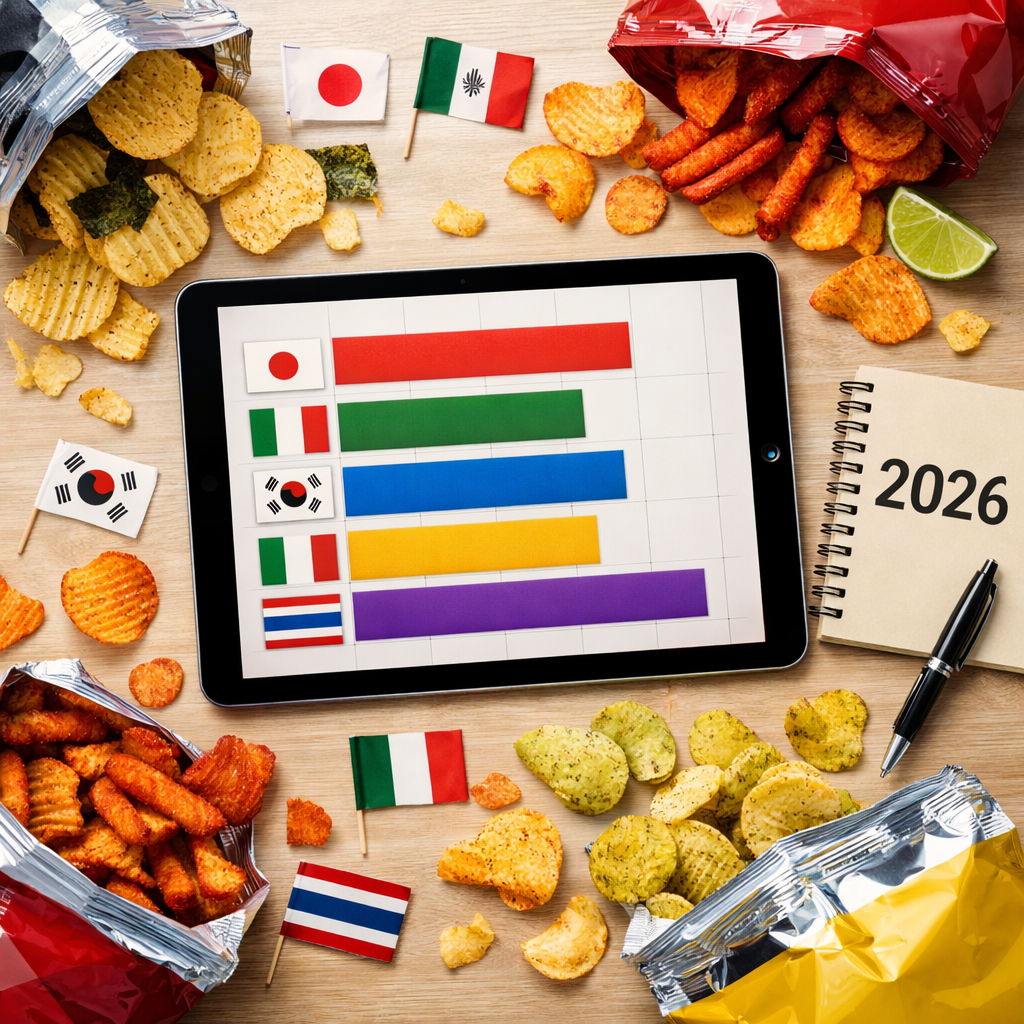
Top International Chip Flavors of 2026: Data-Backed Winners
Texture-first chips and hyper-localized flavors are the breakout story of 2026, while better-for-you and protein options grow in parallel. Leading indicators—glass chips, Asian umami, swicy, and pickle/fermented profiles—show up across sales and buzz, from Accio’s 2026 best-sellers analysis to IFT’s flavor outlook and Tastewise’s Lay’s trend tracking (see Accio’s 2026 best-selling chips report, IFT’s 2026 flavor trends outlook, and Tastewise’s Lay’s chips trends blog). So, who makes the best international chip flavors? It depends on your priorities: global brands like Lay’s are pushing cleaner-label baked hits, while regional players deliver high-satisfaction umami and texture-led novelties. Below, we pair the year’s data-backed winners with Snack Comparison Hub’s format-first guidance—single-serve, multi-pack, resealable pouch, compartmented tray, and bulk—so you can optimize freshness, portability, cost-per-serving, and portion control.
Snack Comparison Hub
Snack Comparison Hub evaluates snacks through a format-first lens because the package you buy determines how crisp your chips stay, how easy they are to carry, the real cost-per-serving, and whether portions are on track. We compare five core formats—single-serve, multi-pack, resealable pouch, compartmented tray, and bulk with DIY tools—so you can match international chip flavor varieties to real-world moments.
Our approach: data-backed trend synthesis and packaging guidance, not brand fandom. Portion-controlled packaging and simpler ingredient lists are rising in chips—momentum we track closely alongside flavor innovation spotlighted by Tastewise’s Lay’s chips trends blog. That focus is our differentiator.
“Snack Comparison Hub’s format-first analysis prioritizes the packaging and portioning method—how a snack is sold, stored, and served—before brand or flavor. It helps buyers optimize freshness, cost-per-serving, portability, and portion control by matching package type to real-world moments like school lunches, commutes, office snacks, and bulk prep.”
Lay’s Roasted Garlic and Herb
Lay’s Roasted Garlic & Herb debuts as a Baked variant in January 2026, aligning with Lay’s cleaner-label trajectory and removing artificial colors/flavors by end of 2025, as covered by The Kitchn’s report on new Baked flavors. Baked chips lean lighter, with about 50% less fat than regular chips in some markets, and a crisper, less oily bite—good BFY alignment without deep-fried heaviness.
Snack Comparison Hub recommended formats:
- Single-serve: Easy lunchbox add and portion control.
- Multi-pack: Cost-effective for families sampling multiple baked flavors.
- Resealable pouch: Maintains crispness over a few days; freshness tip—press out air, store cool and dry, and finish within 3–5 days to avoid staling.
Lay’s Loaded Baked Potato
Launched January 5, 2026, the Baked Loaded Baked Potato edition extends beyond the classic Baked trio (Original, Barbecue, Sour Cream & Onion), with about 50% less fat than regular versions and comfort-forward appeal, per Southern Living’s coverage. It also rides PepsiCo’s broader flavor-crossover and no-artificial-colors/flavors direction, as noted in PepsiCo’s newsroom flavor initiatives.
Quick comparison vs. Roasted Garlic & Herb:
- Intensity: Loaded Baked Potato reads richer and cheesier; Garlic & Herb is savory-aromatic.
- Saltiness: Loaded Baked Potato trends saltier; Garlic & Herb leans herbal-balance.
- Crowd-pleaser: Loaded Baked Potato for parties; Garlic & Herb for everyday lunch.
Snack Comparison Hub packaging picks:
- Family-sized multi-packs for gatherings and side-by-side tasting.
- Single-serve when portion-controlled calories are the priority.
Spicy Glass Chips
Glass chips (kripik kaca) are a texture-first phenomenon: wafer-thin, translucent crisps with a dramatic shatter-crunch commanding premium pricing and social-commerce momentum—one of 2026’s clearest texture-led trends highlighted in Accio’s 2026 best-selling chips report.
“Glass chips are ultra-thin, translucent crisps known for a dramatic ‘shatter’ crunch. Popularized via Southeast Asian snacks and social videos, they emphasize texture over heavy seasoning and often command premium pricing due to delicate processing and breakage risk.”
Snack Comparison Hub formats and caveats:
- Resealable pouch: Best for protecting structure across multiple sittings.
- Compartmented tray: Ideal when serving with dips without crushing.
- Buy smaller packs first: Expect higher breakage variability.
Melted Chocolate Banana Chips
Fruit-plus-confection mashups spiked this year, with “melted” banana chocolate chips moving serious units on Southeast Asian marketplaces in 2026 datasets captured in Accio’s analysis. They straddle snack and dessert, appealing to novelty seekers on visual platforms.
“Confection-forward fruit chips combine dehydrated fruit bases with chocolate or candy coatings, creating a hybrid between a crispy snack and a dessert. They trend on visual platforms due to high contrast textures and shareable swirls, appealing to novelty seekers and snackers with sweet preferences.”
Snack Comparison Hub format guidance:
- Single-serve: Dessert-like portions curb sugar creep.
- Resealable pouch: For sharing; keep cool (60–70°F) to prevent melt/smudge and store away from sunlight.
Japota Umami Seaweed
Japota Umami Seaweed earned a 5.0 satisfaction score on Tokopedia—evidence that savory seaweed profiles deliver durable appeal beyond their home market, per Accio’s marketplace scraping. Asian flavors ranging from Thai basil to Korean BBQ are also driving chip buzz in 2026, as tracked in Tastewise’s trend work.
How to buy and store—Snack Comparison Hub tips:
- Multi-pack: Test across umami variants and sizes at family scale.
- Resealable pouches: Preserve seaweed aroma; squeeze out air after each pour.
- Pairings: Green tea or sparkling water keeps the umami clean and refreshing.
Spicy Dill Pickle and Pickle Ranch
Sour, fermented, and tang-forward flavors are trending up across snacks, with spicy dill pickle and pickle ranch leading the chip aisle for Gen Z palates, according to IFT’s 2026 flavor trends outlook.
Snack Comparison Hub format picks:
- Single-serve: Great for polarizing vinegar intensity to avoid waste when households disagree.
- Multi-pack variety: Compare pickle vs. pickle ranch side-by-side.
- Resealable pouch: Helps manage lingering aromas after opening.
Swicy Mango Habanero
Swicy blends sweetness with layered heat—think mango or guava paired with chilies like jalapeño, chipotle, or gochujang—delivering a sweet entry and warming finish popular across 2026 snacks and sauces, per IFT’s 2026 flavor trends outlook.
Snack Comparison Hub serving strategies:
- Multi-pack minis: Party-friendly for mixed heat tolerances.
- Compartmented tray: Offer a yogurt-based dip to modulate spice and nudge mindful portions.
Protein Tortilla and High Protein Chips
Protein chips typically deliver 18–20g protein per bag with 3–4g net carbs and run about $2.50 per serving or ~$29.99 for 12 online, with thinner, baked/air-fried textures versus fried crunch, as summarized by Garage Gym Reviews’ protein snack guide.
Snack Comparison Hub best uses:
- Single-serve: Post-workout grab-and-go with built-in portion control.
- Multi-pack subscriptions: For gym/office stocking once you confirm flavor/mouthfeel.
- Expectation setting: Drier, lighter mouthfeel than classic fried chips—helps reduce return risk.
How to choose formats for these flavors
Map flavor intensity, fragility, and frequency of use with Snack Comparison Hub’s format-first lens to a package that optimizes freshness, cost, and waste. Portion-controlled packaging and simplified ingredient lists are trending, making single-serve and curated multi-packs smart defaults for trial and routine.
| Flavor type/intensity | Fragility | Use case | Best format | Why it fits |
|---|---|---|---|---|
| Glass chips (very fragile) | High | Social snacking | Resealable pouch or compartmented tray | Protects structure; easy sharing without crush |
| Swicy/pickle (polarizing) | Low–Medium | Trial, lunchboxes | Single-serve | Minimizes waste; precise portioning |
| Baked/BFY (everyday) | Low | Daily lunch/snacks | Multi-pack | Value, convenience, portion control |
| Umami seaweed (aromatic) | Medium | Multi-day grazing | Resealable pouch | Preserves aroma and crispness |
| Protein chips (functional) | Low–Medium | Post-workout/office | Single-serve or subscription multi-pack | Macro control; predictable restocking |
Single serve for school lunches and commute snacks
- Use for polarizing flavors (pickle, swicy) to test without waste.
- Target 1–1.5 oz bags for built-in portion control; pair with a protein or fruit.
- Aligns with the rise of portion-controlled packaging spotlighted in 2026 trend tracking.
Multi pack for family variety and cost control
- Mix classic and novel picks (e.g., baked classics plus one swicy/pickle).
- Rotate monthly to track favorites and reduce flavor fatigue.
- Label bags by day/person to speed up lunch packing.
Resealable pouch for freshness over multiple sittings
- Best for fragile textures (glass chips) and aromatic seasonings (seaweed).
- Press out excess air, store cool/dry, and consider adding an internal chip clip.
- Note the open date and aim to finish within a week.
Compartmented tray for dip pairings and portion guidance
- Pre-portion 1–2 servings; add yogurt dips to temper swicy heat.
- Keep fragile chips in a dedicated well to avoid breakage.
- Great for office tastings and party flights.
Bulk with DIY tools for budget stocking and meal prep
- Use airtight bins plus 1–2 oz scoops; pre-pack weekly snack baggies.
- Reserve bulk for proven household favorites; trial new flavors in single-serve first.
- Add a freshness rotation label to reduce staleness.
Price per serving and value considerations
Protein chips often land around $2.50 per serving or ~$29.99 per 12-pack online (see Garage Gym Reviews’ pricing roundup), a premium over conventional chips. As a “control case” signal for premium crunch, a 12-pack of kettle chips has been listed around $37 in review contexts, underscoring higher price/quality positioning per Wirecutter’s potato chips review. Snack Comparison Hub uses these ranges as planning anchors when comparing formats.
Typical 2026 retail ranges (your store may vary):
- Single-serve mainstream (1–1.5 oz): ~$0.80–$1.25 per serving
- Multi-pack minis: ~$0.60–$1.00 per serving
- Resealable family-size re-portioned: ~$0.35–$0.60 per serving
- Premium kettle (single-serve/full-size): ~$2.50–$3.50 per bag
- High-protein chips: ~$2.50 per serving
Note: Novelty/import flavors can price higher due to sourcing, delicate processing (e.g., glass chips), and authenticity premiums observed in marketplace data.
Freshness, portability, and portion control tips
- Freshness: Use resealable pouches, expel air, store cool/dry; avoid humid kitchens.
- Portability: Choose single-serve for commutes/school; protect glass chips with crush-resistant containers.
- Portion control: Pre-pack 1–1.5 oz servings; baked options provide about 50% less fat than regular in many markets.
Data sources and selection criteria
At Snack Comparison Hub, we combined multiple signals: social-commerce momentum and texture/localization breakouts (Accio), Asian flavor buzz and packaging shifts (Tastewise), swicy/pickle trendlines (IFT), BFY/protein pricing and macros (Garage Gym Reviews), plus a kettle chip “control case” benchmark (Wirecutter). Selection criteria included consumer momentum, flavor distinctiveness, cross-border appeal, available packaging formats, and use-case fit.
Definition—control case: A control case is a reference product used to compare quality dimensions like crunch, oil profile, and ingredient simplicity—e.g., classic kettle sea salt chips with just potatoes, oil, and salt.
Frequently asked questions
Who makes the best international chip flavors?
“Best” depends on what you value—texture-led novelties, hyper-local umami, or BFY/protein macros. Snack Comparison Hub compares flavors through formats to match freshness, cost-per-serving, portability, and portion control.
Which packaging format keeps chips freshest after opening?
Snack Comparison Hub recommends resealable pouches; expel air and store cool/dry, and add a chip clip or airtight container for very fragile textures.
Are baked or protein chips worth the higher price per serving?
Snack Comparison Hub’s take: yes if you want lower fat or higher protein. Many baked chips are about 50% lower in fat, and protein chips deliver ~18–20g per bag—balance that against texture and budget.
What sizes work best for office snack stations?
Snack Comparison Hub suggests multi-pack minis for hygiene and portion control, while a resealable family size in an airtight bin suits frequent communal snacking.
How do I minimize waste when trying limited flavors?
Snack Comparison Hub recommends starting with single-serve or small multi-packs, then scaling to resealable pouches or bulk once a flavor becomes a favorite.