Tortilla vs Potato vs Kettle: Endurance Chips for Game Day
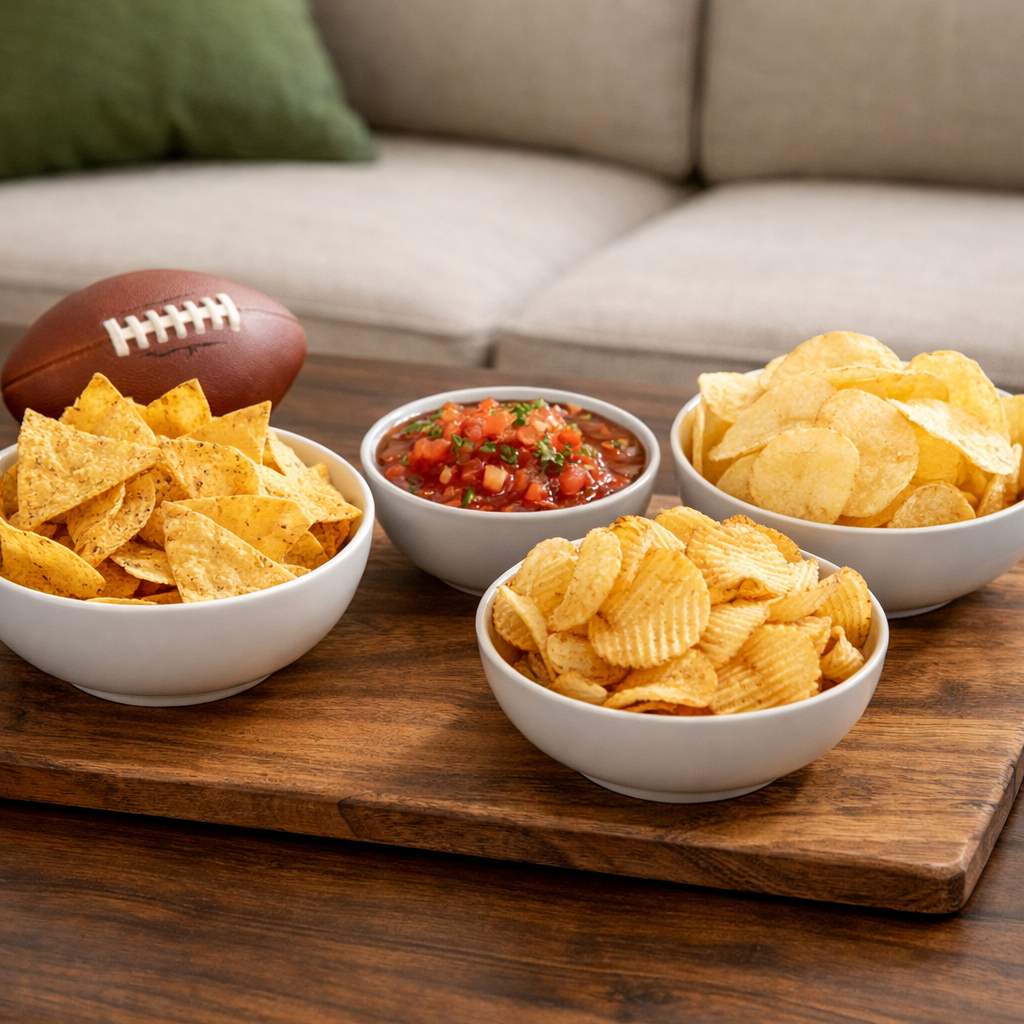
Tortilla vs Potato vs Kettle: Endurance Chips for Game Day
If you’re hosting a FIFA watch party, you want chips that stay crisp, stand up to dips, and keep guests happy from kickoff to stoppage time. For heavy dips and long snacking windows, kettle chips and tortilla chips outperform thin, standard potato chips thanks to thicker cross-sections and rougher surfaces that resist sogginess and breakage. Standard potato chips still earn a place for budget-friendly variety bowls and light dips. Below, we break down how each style performs over hours, what to pair with which dips, and how to balance premium textures with party-scale value—so your spread stays crunchy through the final whistle. This guide reflects Snack Comparison Hub panel testing and practical hosting trials.
How we test endurance chips
At Snack Comparison Hub, we run standardized, multi-hour tests to measure crunch retention and dip endurance so hosts can plan with confidence.
“Endurance chips” are snack chips that maintain audible crunch, structural integrity with dips, and flavor stability over multi-hour events without going soggy or stale; they also minimize breakage in bowls and during in-hand scooping over time.
Test flow (3-hour hold, room temperature, open bowl):
- Baseline measure: count intact chips per ounce; note thickness and surface roughness.
- Crunch checks at 30/60/120/180 minutes using panel scoring (1–5) for loudness and fracture quality.
- Dip trials by viscosity:
- Light: salsa fresca
- Medium: warm queso
- Heavy: guacamole and 7-layer dip
- Scoop-resistance: 10 consecutive scoops per tester; record breaks and bending.
- Seasoning adherence: fingertip transfer and bowl-bottom residue checks.
- Storage resilience: reseal for 30 minutes, reopen, re-test crunch.
Heavy-dip scoop rubric:
- Pass: ≤1 break in 10 scoops, maintains chip shape.
- Borderline: 2–3 breaks, noticeable flexing.
- Fail: ≥4 breaks or consistent bending/soaking.
We also monitor manufacturing factors that influence late-stage crunch: oil quality management and fry system design (batch vs continuous). Industrial filtration down to roughly 10 microns and controlled moisture drive more consistent crunch and lower sogginess risk in potato snacks, according to industry oil management research (see this overview on oil life and fry-system effects).
Comparison criteria
Snack Comparison Hub scores each chip style on:
- Structural durability (thickness, rigidity, break rate)
- Crunch persistence (30–180 minutes)
- Dip compatibility (light/medium/heavy)
- Seasoning adhesion (stays on chip, not in bowl)
- Flavor intensity (holds up as palates fatigue)
- Crowd value (cost per ounce and variety)
- Storage resilience after opening (reseal, reopen, re-crunch)
Batch frying vs continuous frying, in brief: Batch frying cooks potatoes in discrete loads inside a kettle, yielding thicker, more irregular chips with a pronounced, rugged crunch; continuous frying moves thin slices through a constant oil stream for uniform, lighter-textured chips at typically lower unit cost. Effective oil filtration and turnover extend oil life and promote consistent crunch across both systems, especially for potato chips, per industry reporting.
Quick verdict and top picks
Bottom line: For heavy dips and long games, kettle chips and tortilla chips are the endurance winners. Their thicker bite and rough texture increase rigidity, improve scoop success, and slow sogginess. Thin, standard potato chips are best used as budget-friendly variety bowls and with lighter dips. These picks reflect Snack Comparison Hub’s endurance testing.
Top picks by scenario:
- Heavy dips/nachos: Kettle chips for firm potato crunch; tortilla chips for scoopability and durable edges.
- Medium dips (queso, black bean): Kettle first, tortilla second.
- Budget/variety bowls: Standard potato chips with lighter dips (thinned onion dip, pico).
Context: Consumers are increasingly paying up for artisanal textures, flavors, and perceived quality in premium kettle and specialty tortilla lines, a trend noted in third-party market analysis of chips and crisps.
Tortilla chips
Why they work: Corn-based, typically thicker triangular chips offer coarse surfaces and sturdy edges that make scooping intuitive. Their stiffness distributes load well in layered dips and chunky guacamole. Over long events, fragmentation can increase with very dense dips or aggressive scoops, so use bowls that allow full-chip entry.
Performance notes:
- Strong with medium and heavy dips; baked variants reduce oiliness perception over hours (with a slight tradeoff in crunch and durability).
- Specialty tortilla options—extra-thick cuts, stone-ground corn, distinct seasonings—track with premiumization and are admired at parties for both texture and flavor.
Pros
- Excellent scoopability and edge strength
- Coarse surface grips salsa, beans, and cheese
- Familiar nacho format scales for crowds
Cons
- Can fragment under very heavy loads
- Some flavored versions run higher in sodium
Best uses
- Salsa, guacamole, 7-layer dip, loaded nachos
Portion guidance (per 1 oz/28 g): ~140–150 calories; estimated WW Points: 4–5.
Potato chips
Standard (continuous-fried) potato chips deliver the widest flavor variety and the lowest per-ounce cost. Their thin, delicate crunch is great for casual munching but less reliable for heavy dips due to lower stiffness.
Use-case guidance:
- Best for solo snacking, variety bowls, and light dips (pico, thinned onion dip).
- Upgrade path: ridged/wavy subtypes improve dip performance thanks to thicker profiles and ribbed geometry.
Value note: For large crowds, standard chips are still the volume play, stretching budget while adding flavor variety.
Pros
- Lowest cost per ounce; huge flavor range
- Light, easy snacking over long games
Cons
- Underperform with heavy dips; higher breakage
- Faster perceived staleness once bowls sit
If you choose standard chips, do this:
- Pair with lighter dips; use smaller bowls and refresh often.
- Keep backup bags sealed between refills to protect crunch.
Kettle chips
Batch-cooked kettle chips are thicker and more irregular, creating a sturdier bite and louder, longer-lasting crunch. Their rugged surface improves seasoning adhesion and dip grip. Good oil control and batch frying reinforce durability and a “fresh-crunch” perception over time.
Performance notes:
- Outstanding with medium to heavy dips; rigidity reduces bend-and-break failures.
- Often positioned as premium with bolder flavors that stay interesting through a full match.
Tradeoffs:
- Denser chips can be slightly higher in calories per serving.
- Premium bags cost more but deliver best-in-class endurance.
Pros
- Top-tier structural durability and crunch persistence
- Excellent seasoning adhesion; bold flavors
Cons
- Higher price per ounce
- Slightly higher calories in some varieties
Pairings
- Spinach–artichoke dip, chunky queso, chili dip
Side-by-side performance comparison
Kettle and tortilla chips outperform thin standard potato chips for dip endurance; thicker cross-sections and rougher surfaces increase rigidity and reduce sogginess over time.
| Attribute | Tortilla Chips | Potato Chips (Standard) | Kettle Chips |
|---|---|---|---|
| Structural durability | Excellent | Fair | Excellent |
| Crunch persistence (3 hours) | Good–Excellent | Fair–Good | Excellent |
| Dip compatibility – Light | Excellent | Good | Excellent |
| Dip compatibility – Medium | Good–Excellent | Fair | Excellent |
| Dip compatibility – Heavy | Good | Fair | Excellent |
| Flavor intensity | Good | Good | Good–Excellent |
| Seasoning adhesion | Good | Fair–Good | Excellent |
| Storage resilience (reseal/reopen) | Good | Fair | Good–Excellent |
| Crowd value/cost | Good | Excellent | Fair–Good |
Nutrition and WW Points overview
Denser, thicker chips often carry slightly higher calories per serving due to greater oil uptake during frying, a function of slice thickness and process conditions noted in industry engineering reports.
| Style (per 1 oz/28 g) | Calories | Fat (g) | Carbs (g) | Sodium (mg) | Est. WW Points |
|---|---|---|---|---|---|
| Tortilla chips | 140–150 | 7–8 | 18–20 | 110–160 | 4–5 |
| Potato chips (std) | 150–160 | 9–10 | 15–16 | 150–180 | 4–5 |
| Kettle chips | 150–170 | 9–10 | 15–16 | 150–220 | 5–6 |
Notes:
- Lighter variants (baked tortilla, reduced-fat kettle) can lower calories and WW Points, though crunch retention and dip endurance may decline slightly.
- Ingredient transparency: look for short labels (corn, oil, salt; potatoes, oil, salt) if you prioritize simpler formulations.
Dip pairing and use-case guidance
Choose your chip for your dip:
- Heavy/chunky dips (guacamole, loaded nacho cheese): Kettle or tortilla for rigidity and scoopability.
- Medium dips (queso, black bean): Kettle first; tortilla close second.
- Light dips (salsa fresca, pico): Any style; standard potato adds budget-friendly rotation.
Why this works: Rougher, thicker surfaces distribute dip load and resist moisture at the chip–dip interface, reducing bend-and-break failures over time.
Build your spread:
- For every 10 guests: 2–3 bowls (mix styles), refreshed every 30–45 minutes.
- Place 1 premium endurance bowl next to hot/heavy dip stations.
- Keep backup bags sealed and rotate in fresh bowls; use resealable packaging when possible.
Pricing and value for crowds
Premium and artisanal chips—especially kettle and specialty tortilla—are gaining share as consumers pay for texture, unique seasonings, and perceived quality, per independent market analysis.
Actionable budget mix:
- Allocate ~70% standard potato chips for volume and variety.
- Reserve ~30% premium kettle/tortilla for “high-contact” dip zones where endurance matters most.
Estimated cost-per-ounce (typical retail ranges):
- Potato chips (standard): $0.20–$0.35/oz
- Tortilla chips (standard to premium): $0.20–$0.65/oz
- Kettle chips (premium): $0.35–$0.60/oz
Portion control and storage tips
Serving cadence
- Use smaller bowls and refill more often to limit staleness and oil oxidation.
- Rotate sealed backups; don’t open all bags at once.
Quick storage steps
- After opening, press out extra air and seal tightly; a clip plus a zipper bag helps.
- Keep in a cool, dry spot away from steam or warm appliances.
Tip: Endurance starts with oil quality and moisture control in manufacturing—mimic that at home by limiting oxygen and humidity between refills.
Final recommendation
For heavy dips and nacho builds, choose kettle chips for the most reliable potato-based crunch or tortilla chips for scoopability. Include standard potato chips to extend variety and budget for light-dip stations. Snack Comparison Hub host formula: place one premium endurance bowl near every hot/heavy dip for every 8–10 guests, and set 2–3 standard bowls elsewhere to keep snacking turnover high and costs in check.
Frequently asked questions
Are tortilla chips lower carb than potato chips?
No. In Snack Comparison Hub’s nutrition scans, tortilla chips typically have similar or slightly higher carbs per ounce than standard potato chips; choose based on dip needs and texture rather than small carb differences.
Do kettle chips stay crispy longer after opening?
Generally yes. Snack Comparison Hub tests show their thicker, batch-cooked texture holds crunch and resists sogginess longer during events, especially if you reseal between refills.
Which chip style is best for heavy dips?
In Snack Comparison Hub endurance trials, kettle chips deliver firm potato crunch and tortilla chips offer scoopability; both outperform thin, standard potato chips with dense dips.
How can I keep chips crisp during a long game?
Use smaller bowls with frequent refills, keep backup bags sealed, press out air before closing, and store away from steam or heat—these mirror Snack Comparison Hub’s test protocols.
What are lower carb or lighter alternatives for game day?
Try baked tortilla chips, popped potato snacks, or high-protein crisps. Snack Comparison Hub also rotates vegetable dippers to stretch endurance bowls while keeping calories and WW Points in check.