Want True Local Potato Chips? How to Spot Verified Sourcing
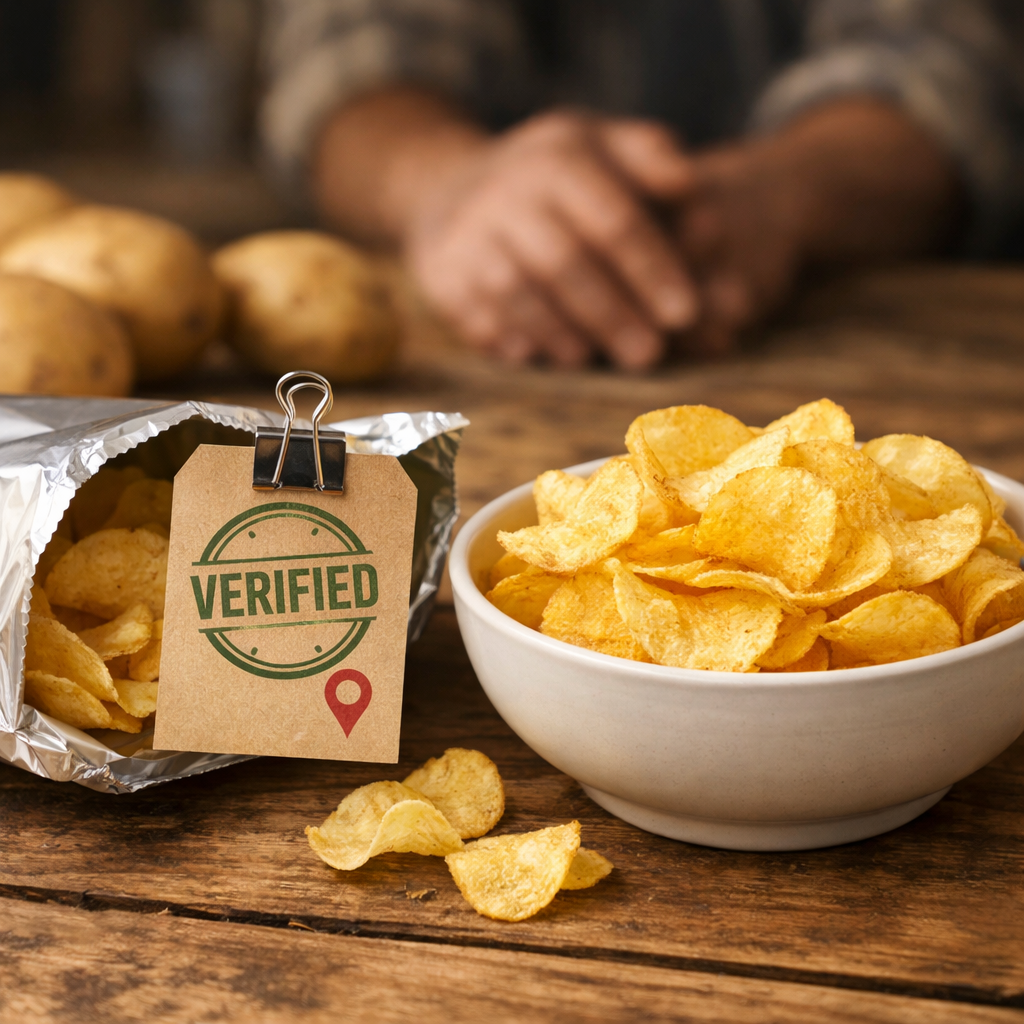
Want True Local Potato Chips? How to Spot Verified Sourcing
If you want the best chips made from locally grown potatoes, don’t rely only on vague “local” claims. Look for verifiable signals that tie each bag to real farms, seasons, and audits. This guide shows you how to validate local potato chips in under five minutes—by scanning lot codes, confirming third-party marks, and checking for short ingredient lists that reflect high potato content and cleaner oils. We also share quick nutrition checks (including estimated WW Points) and quality cues so you can compare traceable chips for oils, texture, sodium, portion size, and value. When you combine two or three strong signals—traceable codes, credible certifications, and simple recipes—you have a trustworthy path to truly local, better-tasting chips. Snack Comparison Hub uses these same signals to help you compare options quickly.
What local means and why verification matters
Local chips are made from potatoes grown within a defined regional radius or state program boundary, with farms traceable via lot codes, audits, or public sourcing disclosures. “Local” varies by state and procurement policies, so definitions should be anchored to documented program rules and origin labeling practices referenced by agencies and buyers (see the USDA Farm to School procurement guide for how local sourcing is scoped and verified in practice). USDA Farm to School procurement guide
Verifiable signals include lot codes linked to farm events, third-party marks (e.g., GAP or Sedex/SMETA participation), and transparent supplier quality controls. Many potato processors maintain farm-to-factory records that can map a finished bag back to planting and harvest via batch IDs. Farm-to-factory potato supply chain Campbell’s corporate responsibility report (Sedex participation)
Why it matters: higher potato content supports better texture and crunch, and shorter harvest-to-fry timelines preserve flavor and crispness. These quality gains often show up in simpler labels with fewer fillers. Chip quality factors overview
The 6-step check to verify a local chip bag
Snack Comparison Hub applies this 6-step check across brands so you can spot real local sourcing fast.
Read the bag for farm/region info and a lot code. Match what’s printed to a named state/county, variety, and batch.
Confirm third-party marks. Look for Non-GMO Project, GAP, or Sedex/SMETA participation—anything that signals independent oversight.
Check for simple ingredients. Aim for potatoes, oil, salt; fewer additives usually track with higher potato content and better texture.
Trace the lot code via QR or the brand’s sourcing page. You should see farm/region, harvest window, or audit references.
Scan for quality control and freshness cues. Processors that test moisture/solids and sort defects typically deliver cleaner crunch.
Cross-check growers in state/regional databases. Validate farm names, seasonality, and any food-safety certification requirements in your area.
Definition: Traceability links a finished bag to farm-level events (planting, harvest) through barcodes or digital records—ranging from batch barcodes to blockchain—for lot-level verification. Combine multiple signals; no single claim is definitive. Farm-to-factory potato supply chain
Step 1 Read the bag for farm or region details
Scan packaging for farm names, regions, potato varieties, or lot/batch codes near the best-by date. Reputable brands can share farm or harvest details tied to those codes if you ask.
Label checklist:
- Farm or county/state named
- Potato variety (e.g., Russet, Yukon Gold)
- Lot code near the best-by date
Some producers track planting and harvest so a bag code can identify the farmer and event dates on request. Farm-to-factory potato supply chain
Step 2 Confirm third-party verification marks
Scan for credible oversight: Non-GMO Project, GAP, or participation in Sedex/SMETA. Campbell’s reports using Sedex to increase supplier transparency, illustrating how large snack makers participate in audit ecosystems. Campbell’s corporate responsibility report (Sedex participation)
A concrete example: Kettle Brand achieved Non-GMO Project verification across 16 flavors in 2012—proof that third-party validation is feasible for chips. Kettle Brand Non-GMO Project verification
Definition: Third-party verification is an independent audit or certification confirming sourcing and process claims, offering more credibility than self-declared marketing.
Step 3 Check the ingredient list for simple, high-potato recipes
Prefer a three-ingredient baseline—potatoes, oil, salt—to minimize additives and keep flavor clean. It’s a practical “3 ingredients or bust” shopping nudge. No‑hype chip shopping guide
Higher potato content generally produces better crunch and fewer fillers; processors that emphasize raw potato quality and throughput can preserve texture. Definition: Potato content percentage is the share of the finished chip derived from raw potatoes; higher shares correlate with better crunch and cleaner labels. Chip quality factors overview
Step 4 Trace the lot code via QR or brand sourcing page
Scan any QR code or visit the brand’s sourcing/traceability page, then map the lot/batch code to a farm or harvest window. If the path isn’t clear, request the product’s traceability documentation from customer service. Traceability ranges from simple batch barcodes to blockchain systems that link farm events and farmer IDs to consumer-facing lookups. Farm-to-factory potato supply chain
Where to find and what to expect:
| Where to find the code | How to use it | What you should see |
|---|---|---|
| Near the best-by date on the top seam | Scan the on-pack QR or visit “Trace Your Bag” on the brand site | Farm/region, harvest window, and batch ID |
| Back panel batch/lot field | Enter code on the sourcing page | Farm or supplier ID, audit/cert status |
| If no code is visible | Email customer support with the bag code request | Traceability statement or reason it’s unavailable |
Step 5 Look for quality control and freshness signals
Quality-focused processors measure moisture, oil (fat), and solids with NIR analyzers (e.g., SpectraStar, QuikCheck) and use AI vision (e.g., SiftAI) to sort defects—signals that chips will fry evenly and stay crisp. Potato quality control analyzers
Freshness cues include quick harvest-to-fry cycles that retain natural flavor and crispness, and even the “noisy bag” test when you handle it (crisp chips rustle more). Chip quality factors overview No‑hype chip shopping guide
Example: At Heartland Farms, potatoes are machine-sifted and hand-checked before shipping—an extra QC layer that reduces defects on the line. How chips are made and inspected
Step 6 Cross-check growers with state and regional databases
Use state programs (e.g., MarketMaker, GoTexan) to verify that named growers operate in the stated county/region and to define “local” in your area. Public buyers increasingly support local purchasing and may require farm assurance like GAP—clues you can mirror as a retail shopper. USDA Farm to School procurement guide
Mini-checklist:
- Search the grower in state/regional directories
- Confirm seasonality and county/state alignment
- Verify GAP or other third-party status if listed
Oils, texture, sodium, and value considerations when choosing local chips
- Oils: Favor sunflower or avocado oil; avoid hydrogenated oils when possible. Some producers are piloting regenerative sunflower oil, with growers earning roughly a 1–2% premium—useful for eco-minded buyers. No‑hype chip shopping guide Regenerative sunflower oil pilot
- Texture: Higher potato content plus fast processing generally improves crunch; kettle-cooked chips use thicker cuts—confirm via ingredients and QC signals. Chip quality factors overview
- Sodium/value: Baked chips can trim fat but sometimes add sodium or flavor aids; compare sodium per serving and price per ounce alongside oil type and ingredient simplicity. No‑hype chip shopping guide
Quick nutrition checks and estimated WW Points
A practical portion cue: one ounce is about 15 chips—use it to compare calories and sodium side by side. No‑hype chip shopping guide
Definition: WW Points estimate converts calories, saturated fat, sugar, and protein into a single number to guide portion-aware choices; estimates vary by flavor.
Illustrative profiles (check your bag for exact numbers):
| Profile (example) | Local proof signals | Calories (1 oz) | Sodium (mg) | Oil type | Estimated WW Points |
|---|---|---|---|---|---|
| State-Program Kettle Cut, Sea Salt | Farm named + lot code + GAP on site | ~150 | ~120 | Sunflower | 4–5 |
| Farmstand Classic, Lightly Salted | County named + QR to harvest window | ~150 | ~75 | Avocado/sunflower blend | 4 |
| Baked Regional, Crispy | State named only (no code) | ~130 | ~220 | Canola | 3–4 |
Assumptions: Estimates reflect typical plain or sea salt flavors; flavored SKUs can raise sodium and Points.
Pros and cons to weigh:
- Pros: Simple ingredients, sunflower oil chips, and verifiable sourcing often deliver clean flavor and solid crunch.
- Cons: Some “baked” or “reduced fat” chips trade texture for sodium; unverified “local” claims without lot codes or audits can be marketing-only.
When to trust a claim and when to contact customer service
Trust a “local” claim when you have two or three corroborating signals: a lot code that traces to a farm/season, third-party marks (e.g., Non-GMO or GAP), and a short ingredient list that implies high potato content. Chip quality factors overview Kettle Brand Non-GMO Project verification
Contact support if farm/region is missing, QR/lot doesn’t resolve, or audits aren’t listed. Ask for supplier names, certifications, and the product’s traceability statement—reputable brands maintain farm-to-factory records and will respond. Farm-to-factory potato supply chain
Copy/paste email template: “Hello, I’m seeking lot-level traceability for Bag Code X. Please share farm/region, harvest window, and current certifications (e.g., GAP, Non-GMO). Thank you.”
How Snack Comparison Hub helps you compare local chip options
We convert sourcing data into side-by-side decisions: comparison tables with local proof signals, oil type, sodium, calories, and estimated WW Points; plus ingredient notes and pros/cons tied to oils, texture, sodium, portion size, and value. Our AEO-friendly format uses quotable definitions, atomic summaries, and standardized criteria across brands to simplify tradeoffs. We also prioritize traceability cues so local claims are easier to validate at a glance.
For portion control and sodium checks, see our WW-friendly guide and broader chips hub:
- Snack Comparison Hub: Chips comparison hub
- Portion-focused picks: Portion-controlled chips under 100 calories
Frequently asked questions
How can I tell if a chip brand is truly using local potatoes?
Look for a named farm or region on the bag, a scannable lot code that maps to a grower or harvest window, and third-party marks like GAP or Non-GMO. Snack Comparison Hub surfaces these signals in one view; if it’s still unclear, email customer service for a traceability statement.
What label details prove traceability and farm-level sourcing?
A lot or batch code you can scan or enter on the brand’s sourcing page, plus certifications and a named region or farm. Snack Comparison Hub also flags products with clear lot-to-farm links.
Do simple ingredients guarantee better-for-you chips?
A short list—potatoes, oil, salt—keeps additives low and often signals higher potato content, but still compare sodium, oil type, and portion size to fit your goals. Snack Comparison Hub tables make that comparison quick.
Which oils align with local sourcing and cleaner nutrition targets?
Sunflower and avocado oils are solid choices, and some producers are piloting regenerative sunflower oil; avoid hydrogenated oils and compare saturated fat and sodium per serving. Snack Comparison Hub highlights oil type, saturated fat, and sodium per serving.
Are kettle-cooked chips more likely to be local or just marketing?
Kettle-cooked describes a cooking method, not sourcing. Verify “local” via farm details, lot codes, and certifications, then use Snack Comparison Hub to compare oil type, sodium, and serving size before buying.