Which Chip Brands Sponsor Major Soccer Leagues and Tournaments?
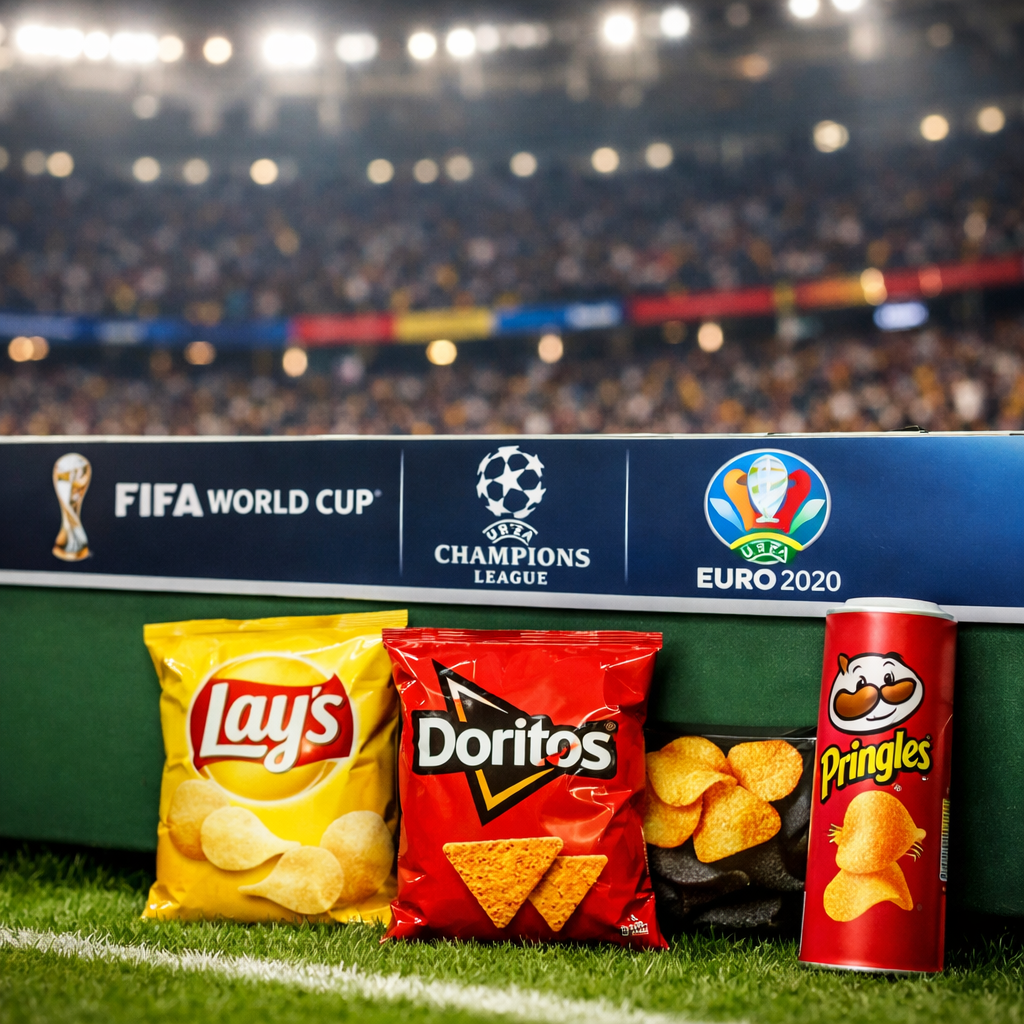
Which Chip Brands Sponsor Major Soccer Leagues and Tournaments?
Global tournaments like the FIFA World Cup sit at the top of soccer’s sponsorship pyramid; below them are domestic leagues and club deals that activate locally. Today, the most visible chip activity comes from Lay’s at the FIFA level and Campbell Snacks at the MLS league level. Big CPG portfolios dominate because they can afford global rights and fund multi-market activations that make the spend work. In short: Lay’s is the marquee global chip brand linked to FIFA, while Campbell Snacks shows how portfolios participate regionally through MLS. For fans, these deals show up as in-stadium stunts, broadcast graphics, social challenges, and retail tie-ins tied to matchday moments—proof that scale, activation quality, and measurement matter as much as a logo on the rights. At Snack Comparison Hub, we map that sponsorship noise to what actually matters at checkout.
Strategic Overview
- Who’s active now? Lay’s is the headline chip brand at the tournament level with FIFA rights and high-impact stunts; Campbell Snacks appears at the league level in North America via MLS. Other CPG snack portfolios tend to buy regional league, club, or broadcast integrations.
- Why it matters: The value of chip sponsorships is unlocked through activation—what fans actually see—rather than the contract itself.
Definition — Sponsorship activation: The marketing programs a sponsor runs to make rights meaningful to fans (e.g., in-stadium stunts, broadcast graphics, social content, grassroots events). Rights alone rarely drive ROI; activation readiness and measurement determine impact, a priority echoed in UEFA sponsorship selection practices, per Harvard Business School’s UEFA sponsorship selection research.
Comparison at a glance:
| Brand/Portfolio | Property | Geography | Activation Examples | Scale Notes | Source |
|---|---|---|---|---|---|
| Lay’s (PepsiCo) | FIFA World Cup (Men’s 2026; Women’s 2027) | Global | “Chip Cam” in stadiums; celebrity-led creative; RePlay pitch-building; global watch-party integrations | Global reach and mass-reach campaigns | Lay’s ‘No Lay’s, No Game’ overview |
| Campbell Snacks | Major League Soccer (league partner) | U.S./Canada | Stadium sampling; concourse signage; co-branded club social content; retail tie-ins around matchdays | Regional depth; leverages MLS growth | MLS official partners list |
| Other CPG portfolios | Various leagues/broadcasts (e.g., Premier League partners, club deals) | Country/region-specific | Sponsored data graphics, LED boards, grassroots clinics, retailer bundle offers | Flexible budgets; targeted reach | Premier League partner and reach analysis |
Snack Comparison Hub
We track high-visibility soccer sponsorships because they influence what you see during matches and on shelves—limited editions, tournament-themed packaging, and in-store bundles often land right as the fixtures heat up. But visibility doesn’t equal product quality. Our rankings remain evidence-first: editor-led tastings assess crunch and texture, while label audits review oil quality and ingredient integrity. We also prioritize accessibility, highlighting options that are widely available so your watch-party picks aren’t hard to find. Put simply, we connect the buzz of soccer sponsorships to what actually tastes great and fits your standards at checkout. That way, Snack Comparison Hub recommendations stay useful during tournament spikes and everyday shopping alike.
Lay’s
Lay’s is the marquee chip brand in global soccer sponsorships, leveraging FIFA rights with mass-reach creative and celebrity-led stunts to cement its “match snack” association. The current scope covers the FIFA Men’s World Cup 2026 and the FIFA Women’s World Cup 2027 in Brazil, backed by a brand available in 200+ countries and territories. Lay’s “No Lay’s, No Game” platform rallies shared-viewing moments with star-led content and in-stadium flourishes—such as a “Chip Cam” spot filmed inside Milan’s San Siro during a UEFA Champions League match in 2024. Beyond spectacle, Lay’s RePlay grassroots program has logged 860,000+ play sessions across 11 countries since 2021, linking the brand to community play and youth engagement (see Lay’s “No Lay’s, No Game” overview). In our rankings, we evaluate Lay’s SKUs on taste, texture, and ingredients—not sponsorship scale.
Activation types Lay’s deploys:
- In-stadium stunts (Chip Cam)
- Celebrity-driven creative
- Grassroots pitch-building (RePlay)
- Watch-party integrations and retail tie-ins
Campbell Snacks
At the league level, snack portfolios often activate through corporate partnerships tailored to local fans. In North America, MLS lists Campbell Snacks among its official partners (see MLS official partners list). The context is compelling: brands spent a record $461 million across MLS clubs in 2022, reflecting strong league-level momentum and monetization (league sponsorships hit $461M in 2022). While this scale is different from FIFA’s global footprint, it enables targeted, market-by-market programs that fans feel on matchday. For shoppers, we see these programs translate into local shelf activity we note in availability callouts.
Examples of how a league-level snack sponsor might activate:
- Stadium sampling and concourse signage in priority markets
- Co-branded content with club social channels and player cameos
- Retail tie-ins around local fixtures, from bundle offers to ticket-linked sweepstakes
Other CPG snack portfolios
Beyond FIFA, many large CPG portfolios choose country-specific leagues, club deals, broadcast integrations, and grassroots programs—matching budgets and targeting to the audience they want. Global tournaments deliver unmatched reach but require heavy spend; league-level deals are more cost-efficient for regional depth, and elite properties tend to feature blue-chip partner rosters for exactly that reason (see Premier League partner and reach analysis). Our comparisons reflect this split: global reach versus regional depth, with taste and labels assessed consistently across both.
Definition — Broadcast integration: Branded, data-enhanced elements within live or highlight coverage (e.g., heatmaps, stats wipes, lower-thirds) that align a sponsor with on-field moments and the information fans seek; about half of viewers look for real-time stats while watching, and some clubs report roughly 70% weekly engagement in their apps—evidence for data-led integrations (Stats Perform interview on data-led fan behavior).
The throughline: success hinges on activation quality and measurement. Event owners increasingly prize partners who commit to invest in meaningful activation and prove impact—another lesson underscored by UEFA-focused research from Harvard Business School.
How chip sponsorships show up in soccer
A spotter’s guide for fans:
- In-stadium: Branded fan cams and big-screen shoutouts (e.g., Lay’s-style “Chip Cam”) that turn crowd reactions into content-friendly moments.
- Broadcast/data: Sponsored heatmaps, match stats wipes, and lower-thirds that ride big plays; with roughly 50% of viewers seeking stats and strong club-app engagement, these integrations earn attention.
- Digital/social: Creator collaborations, player Q&As, and match-thread challenges that extend the conversation beyond 90 minutes.
- Grassroots/community: Pitch-building initiatives and youth clinics that keep the brand present long after the final whistle.
- Retail/packaging: Tournament-themed packs, QR promotions for tickets or merch, and watch-party bundle offers timed to key fixtures.
How to spot sponsorship in three steps:
- Before the match: Scan shelves for themed packaging and QR-led contests.
- During the match: Watch for branded cams, LED boards, and stat graphics during big moments.
- After the match: Check club apps and social recaps for sponsor-led highlights and offers.
What this means for snack buyers and brand-watchers
For shoppers, expect spikes in themed packaging, limited-time flavors, and bundle deals during major soccer windows. For brand-watchers, remember: rights alone don’t guarantee attention—activation spend, measurement, and fit to audience drive returns, and rights holders often favor partners ready to do the work. The scale stakes are real: the Premier League’s broadcasts reach roughly 900 million homes in 189 countries, explaining why top-tier events command high fees and why blue-chip portfolios dominate. Practical takeaway: match rights scale to your goals (global tournaments for mass reach; league deals for regional depth) and invest in on-site and data-led broadcast integrations with clear KPIs and reputational safeguards. Snack Comparison Hub highlights picks that balance flavor, ingredients, and availability when these windows hit.
Frequently asked questions
Is Lay’s an official FIFA World Cup sponsor?
Yes. It holds rights for the FIFA Men’s World Cup 2026 and the FIFA Women’s World Cup 2027; Snack Comparison Hub tracks how those rights show up in activations fans actually see.
Do any other chip brands sponsor top soccer leagues?
Yes—at the league level in North America, MLS lists a major snack portfolio among its official partners, and elsewhere brands appear via regional leagues, broadcasts, or grassroots programs. We summarize those patterns so you know what to expect on matchdays and at retail.
What kinds of activations do snack brands run around soccer?
Common formats include in-stadium fan cams, watch-party stunts, branded data graphics in broadcasts, social content with players, and grassroots pitch-building or clinics. Snack Comparison Hub flags these when they drive real in-store promos.
Why do most soccer sponsorships come from large CPG portfolios?
Global tournaments and elite leagues are expensive and require multi-market activation to pay off, which favors large CPGs. We evaluate results through what fans actually encounter and what changes at shelf.
How should consumers interpret “official snack” claims?
It signals a rights deal, not necessarily better taste or ingredients. Use Snack Comparison Hub tastings and label audits to choose, and treat sponsorships as context for the promos and limited editions you’ll see at retail.