Which Chip Brands Use Real Ingredients? A No-Nonsense Comparison
Which Chip Brands Use Real Ingredients? A No-Nonsense Comparison
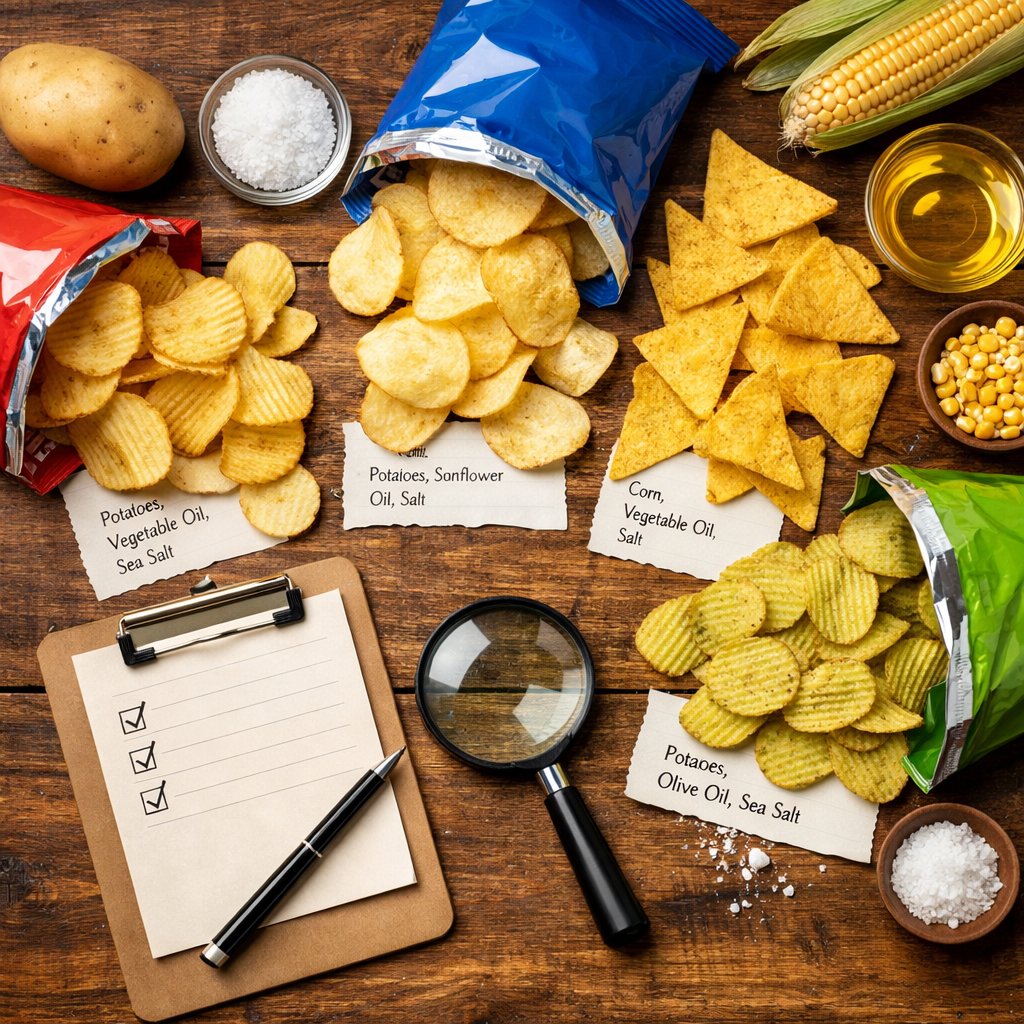
“Real ingredients in chips means short, recognizable items like potatoes or legumes, oil, and salt, with minimal additives.” Many mainstream and specialty brands already meet this simple bar—especially their sea salt or lightly salted SKUs. The big variables that separate them are oil type (avocado vs. blended vegetable oils), cooking method (kettle, fried, baked, popped), sodium per serving, and portion control. Below, Snack Comparison Hub compares leading options—from kettle-cooked potato chips to avocado oil and bean-based picks—plus practical notes on single-serve packs around 100 calories, estimated WW points, and where to find locally grown or locally sourced calls on the label.
How we define real ingredients
Real ingredients in chips means short, recognizable items like potatoes or legumes, oil, and salt, with minimal additives. Snack Comparison Hub uses this definition across our comparisons. Many potato chips truly use just three ingredients—potatoes, oil, and salt—though oil type and added flavors vary by brand, as shown in this dietitians’ three-ingredient chip roundup from Eat This, Not That (Best Three-Ingredient Potato Chip Brands).
Oil choices—avocado, olive, sunflower, safflower, canola, corn, cottonseed, soybean—differ in unsaturated fat profiles and frying performance. Labels often show blends; you’ll typically see “vegetable oil (canola, sunflower, safflower, etc.).”
Acrylamide is a chemical that can form in starchy foods (like fried potatoes) during high-heat cooking. Animal studies link high acrylamide exposure to cancer risk. It’s not added to chips; it can develop from frying temperatures and time (see this overview from Today: healthiest chips guidance and acrylamide context).
What to look for on the label
- Start with the base: three-item lists (potatoes or vegetables + oil + salt) signal simplicity, and many sea salt SKUs meet this mark (see the Eat This, Not That roundup linked above). Expect common vegetable oil blends; the specific oils listed hint at cost, heat stability, and flavor neutrality.
- Oil hierarchy to scan for: avocado, olive, high-oleic sunflower/safflower near the top; watch for broad “vegetable oil” blends, and note that some regional chips still use lard (Wirecutter’s breakdown of classic potato chips illustrates these patterns: Lay’s and others by ingredients).
- Check sodium per serving and watch for preservatives like TBHQ on some labels. Big brands are steadily moving away from artificial colors and flavors and are highlighting “real” ingredients more prominently (industry coverage: packaging and reformulation shifts).
- Locally grown signals: some regional makers call out “locally sourced” or state-grown potatoes. It won’t change nutrition, but it can support local agriculture and reduce travel miles.
Evaluation criteria for this comparison
At Snack Comparison Hub, we score chips on ingredient simplicity, oil type, cooking method, sodium per serving, calories, estimated WW points, availability (including single-serve ≤100-calorie packs), and familiar flavors.
- Method trade-offs: baked and popped styles generally lower fat, while kettle/fried deliver signature crunch and richer flavor (see Everyday Health’s review of “healthy” chips for method context: what holds up and why). Consider acrylamide exposure for fried chips (see Today link above).
- Label integrity: Non-GMO or organic claims, simpler sea salt SKUs, and movement to real colors/spices (e.g., paprika, turmeric) are positive signals (industry reformulation trends noted in Bakery & Snacks above).
Snack Comparison Hub side-by-side picks
| Brand | Base ingredient(s) | Oil type | Cooking method | Notable label notes | Sodium/serving (typical) | Est. WW points | Single-serve ≤100 calories available (Y/N) |
|---|---|---|---|---|---|---|---|
| Kettle Brand | Potatoes, sea salt | Vegetable oil blend (canola/sunflower/safflower) | Kettle-cooked | Clean sea salt SKU; strong crunch | 120–180 mg | 4–5 | N |
| Jackson’s | Sweet potatoes | Avocado oil | Fried | Non-GMO heirloom sweet potatoes; premium price tier | 90–150 mg | 4–5 | N |
| Siete | Potatoes or tortillas (varies by line) | Avocado oil | Kettle-cooked | Some SKUs use just three ingredients; grain-free tortilla options | 90–160 mg | 4–5 | N |
| Hippeas | Chickpea flour | Sunflower or blends | Puffed | Vegan; higher fiber/protein than potato chips | 130–240 mg | 3–4 | Y |
| Terra | Root vegetables (beet, taro, parsnip, etc.) | Vegetable oil blend | Fried | Colorful root mix; whole-veg slices | 50–150 mg | 4–5 | N |
| Popchips | Potatoes | Blend (minimal oil) | Popped (not fried) | Lower fat; broad flavor set; 100-cal snack packs | 150–280 mg | 3–4 | Y |
| Lay’s | Potatoes | Vegetable oil (sunflower/corn/canola) | Fried | Classic sea salt transparency; ubiquitous single-serve varieties | 150–180 mg | 4–5 | Y |
| SunChips | Whole grains | Sunflower or blends | Baked | Whole grains; some reduced-fat and black bean variants | 120–200 mg | 3–4 | Y |
| Biena Tasty Thins | Chickpea-based crisps | Blend | Baked | ~45 cal per 10 crisps; modest protein | 70–160 mg | 3–4 | Y |
| Boulder Canyon | Potatoes | Avocado or olive oil (select SKUs) | Kettle-cooked | Non-GMO options; premium oils | 100–180 mg | 4–5 | N |
| Zack’s Mighty | Corn (tortilla) | Avocado oil | Fried/thick-cut | Organic; sturdy for dips/nachos | 65–140 mg | 4–5 | N |
Method note: Sodium and WW points are typical ranges for sea salt/original SKUs; flavored chips can be higher. WW points are estimates and can vary by plan.
- Best for parties (durable dippers): Zack’s Mighty, Kettle Brand, Boulder Canyon avocado-oil kettle.
- Best for school lunches (≤100 calories, sodium balance): Popchips 100-cal packs, SunChips minis, Biena (count crisps).
- Best for flavor-first snackers (kettle texture, sea salt): Kettle Brand Sea Salt, Siete Sea Salt, Lay’s Classic.
Kettle Brand
Kettle Brand Sea Salt typically lists potatoes, vegetable oils (canola/sunflower/safflower), and sea salt; in blind tastings, kettle-cooked, sea-salted chips often win for pure potato flavor and deep crunch (Serious Eats on best potato chips). These are classic kettle-cooked chips with a vegetable oil blend. Keep an eye on sodium and consider pairing a standard bag with smaller bowls or single-serve strategies to cap portions.
Jackson’s
Jackson’s Sweet Potato Chips use non-GMO heirloom sweet potatoes and avocado oil, delivering a short ingredient list and rich, crisp texture (profiled by the Good Housekeeping Test Kitchen). These avocado oil chips are priced at a premium; if calories are a concern, seek smaller packs when available to stay near 100 calories.
Siete
Siete’s kettle-cooked chips emphasize simple ingredient lists—select SKUs use just potatoes, avocado oil, and sea salt—with grain-free, avocado oil tortilla chips also in the lineup (see the Good Housekeeping guide linked above). Choose sea salt or lime for party-friendly flavors and check sodium if you’re snacking straight from the bag.
Hippeas
Hippeas are chickpea-based puffs that deliver more fiber and protein than standard potato chips while staying vegan-friendly (covered in the Everyday Health review). They’re still snacks, so watch serving sizes; mini bags can be a tidy lunchbox add or gym-bag crunch.
Terra
Terra has made chips from whole vegetables—including beets, taro, and parsnip—since 1990, offering striking color and varied textures on a platter (Tasting Table ranking). Enjoy them as root vegetable chips, but remember they’re still fried in oil; check sodium and portions.
Popchips
Popchips are made with heat and pressure rather than deep-frying, which helps lower fat and calories compared with traditional chips (context in the Everyday Health piece linked above). They shine in 100-calorie snack packs and bring family-friendly flavors with travel-proof crunch.
Lay’s
Wirecutter lists Lay’s Classic as potatoes, vegetable oil (sunflower/corn/canola), and salt—simple and familiar (Wirecutter’s best potato chips). Across major brands, packaging has increasingly spotlighted “real” ingredients and the removal of artificial flavors/colors by the end of 2025 (industry reporting linked earlier). Lay’s broad flavor range and omnipresent single-serve options make it an easy lunch or party default; pick sea salt/lightly salted for the cleanest labels.
SunChips
SunChips are made with whole grains like whole wheat, oats, and brown rice flour, offering a toasty crunch with fiber benefits (Everyday Health). SunChips Black Bean variants deliver about 14 g whole grains and 3 g fiber per serving with roughly 30% less fat than typical chips (summarized by EatingWell’s dietitian guide). Minis can get you closer to 100 calories per pack.
Biena
Biena Tasty Thins are chickpea crisps with about 3 g protein per serving and roughly 45 calories per 10 crisps—handy for counting out a 90–100 calorie snack (per EatingWell’s feature). They’re a lighter-calorie, portion-friendly option for lunchboxes and WW estimations.
Boulder Canyon
Boulder Canyon leans into healthier oils like avocado and olive oil and offers Non-GMO options (noted in the Good Housekeeping testing roundup). Expect kettle crunch and premium pricing; check sodium and stick with sea salt SKUs if you want simpler labels.
Zack’s
Zack’s Mighty Organic Avocado Oil tortilla chips are thick-cut for serious dipping and built to hold up under nacho loads (highlighted by Good Housekeeping). They’re an organic, avocado oil tortilla chip option that’s party-ready.
Head-to-head by cooking oil type
- Avocado oil: Jackson’s, Siete, Boulder Canyon (select SKUs), Zack’s (Good Housekeeping).
- Vegetable oil blends (canola/sunflower/safflower): Kettle Brand; Lay’s uses sunflower/corn/canola (Serious Eats; Wirecutter).
Vegetable oil blends combine oils like canola, sunflower, safflower, corn, cottonseed, or soybean to balance cost, flavor neutrality, and frying performance. Labels often read “vegetable oil (canola, sunflower, etc.).” Nutrition varies by the blend’s unsaturated fat profile (see Eat This, Not That link above).
Head-to-head by nutrition per serving
| Brand (typical sea salt/original) | Calories | Total fat | Sodium | Fiber/protein | Est. WW points |
|---|---|---|---|---|---|
| Kettle Brand | 150–160 | 9–10 g | 120–180 mg | 1–2 g / 2 g | 4–5 |
| Jackson’s | 150–160 | 9–11 g | 90–150 mg | 2–3 g / 1–2 g | 4–5 |
| Siete (tortilla/potato) | 140–150 | 7–9 g | 90–160 mg | 1–2 g / 1–2 g | 4–5 |
| Hippeas (puffs) | 130–150 | 5–8 g | 130–240 mg | 3–5 g / 3–5 g | 3–4 |
| Terra | 150–160 | 9–10 g | 50–150 mg | 2–3 g / 1–2 g | 4–5 |
| Popchips | 100–120 | 3–5 g | 150–280 mg | 1–2 g / 1–2 g | 3–4 |
| Lay’s Classic | 150–160 | 10 g | 150–180 mg | 1 g / 2 g | 4–5 |
| SunChips Original | 140–150 | 6–7 g | 120–200 mg | 2–3 g / 2–3 g | 3–4 |
| Biena Tasty Thins | 100–120 | 3–5 g | 70–160 mg | 1–3 g / 3–4 g | 3–4 |
| Boulder Canyon (avo/olive) | 150–160 | 9–10 g | 100–180 mg | 1–2 g / 2 g | 4–5 |
| Zack’s Mighty | 140–150 | 7–9 g | 65–140 mg | 2–3 g / 2–3 g | 4–5 |
Notes:
- Baked/popped options trend lower in fat; whole-grain/bean choices trend higher in fiber (Everyday Health; EatingWell links above).
- Fried chips can form acrylamide; see the definition above for context and ways to moderate exposure.
Portion control and single-serve options at or under 100 calories
Commonly found near 100 calories per 0.75–1.0 oz pack:
- Popchips 100-calorie snack bags (various flavors).
- Lay’s Baked or Popables mini packs (~100 calories; check pack).
- SunChips minis (select multipacks near ~100–110 calories).
- Biena Tasty Thins: about 20–22 crisps ≈ ~90–100 calories (easy to count out at home).
3-step portion plan:
- Choose single-serve packs at or under 100 calories.
- Target sodium ≤200 mg per pack.
- Estimate WW points and log before you open the bag.
Snack Comparison Hub pro tip: When scanning shelves, look for “Best single-serve ≤100 calories” callouts on club/multipack boxes to simplify lunch packing.
Flavor availability and family-friendly picks
- Kids/lunchboxes: classic sea salt or lightly salted, cheddar-style Popchips, SunChips whole grain.
- Hosts: Zack’s Mighty for sturdy dips, Terra for color variety, Kettle Brand Sea Salt for crowd-pleasing crunch.
- Dieters: Popchips and Biena for the most volume per calorie.
Simple sea salt SKUs typically have the cleanest labels versus heavily seasoned variants.
Price and availability notes
Avocado- and olive-oil chips and root/bean-based lines usually cost more; that premium is consistent across brands (as seen in Good Housekeeping’s testing). For value, compare mainstream sea salt SKUs with short labels—Kettle Brand and Lay’s are widely available at supermarkets (Serious Eats; Wirecutter). Bulk club multipacks can materially lower per-pack costs for 100-calorie snacks. Locally grown or region-specific potato chips may be seasonal or limited to certain retailers.
Practical recommendations by use case
- Parties/dipping: Zack’s Mighty avocado oil tortilla chips for sturdiness; Kettle Brand Sea Salt for neutral flavor and serious crunch.
- School lunches: Popchips and SunChips minis for a lower-fat, fiber-friendly balance; Biena Tasty Thins for a low-calorie crisp count.
- Portion/points: Choose simple sea salt SKUs, favor avocado/sunflower oils, and stick to 100-calorie packs.
Bottom line and how to shop smarter
- Prefer three-ingredient SKUs (potato/veg + oil + salt).
- Favor avocado/olive/high-oleic sunflower or safflower oils; avoid lard unless that’s your intent.
- Consider baked or popped to cut fat; frying boosts crunch and may increase acrylamide.
- Keep sodium moderate; seasoned chips often push it up.
- Use single-serve ≤100 calories and track estimated WW points.
One-line takeaway: Real-ingredient chips are common—oil type, sodium, and portion size ultimately separate smarter picks from the rest. Use the Snack Comparison Hub side-by-side table above to filter by oil, sodium, and single-serve availability quickly.
Frequently asked questions
Are chips with three ingredients always healthier?
Not always—oil type, sodium, cooking method, and portion size still drive nutrition. Use Snack Comparison Hub’s side-by-side table to compare fat and sodium quickly.
Which cooking oils should I prioritize on chip labels?
Prioritize avocado, olive, or high-oleic sunflower/safflower. Snack Comparison Hub flags oil types on each pick so you can choose fast.
Do vegetable or bean chips count as a serving of vegetables or protein?
They add some fiber or protein, but they’re still snacks—not servings of vegetables or full protein. Check Snack Comparison Hub’s nutrition ranges and stick to measured portions.
How can I keep sodium and calories in check without losing flavor?
Choose sea salt or lightly salted SKUs and single-serve packs around 100 calories. Snack Comparison Hub highlights these options; pair with fresh salsa or yogurt-based dips for extra flavor.
Are baked or popped chips better than fried chips?
Often yes for cutting calories and fat. Snack Comparison Hub labels cooking methods so you can pick baked or popped, or choose fried and keep portions smaller.